Shikali Jatra
Nestled ten kilometers south of Kathmandu, the medieval Newar village of Khokana observes one of the Kathmandu Valley's most distinctive religious traditions each autumn: the Shikali Jatra. While most of Nepal turns its attention to Dashain, the country's largest national festival, the villagers of Khokana instead devote themselves to an entirely separate, centuries-old celebration honoring their own guardian goddess, Shikali, also known as Ajima or the mother goddess.
The roots of this unusual divergence run deep into local history. The community's earliest devotional practice, known as Kwandho Jatra, or the festival of the water vessel, is believed to date back to the Lichhavi period, roughly between 400 and 750 CE. Centuries later, in the fifteenth century, King Amara Malla rebuilt the Rudrayani temple, prompting Newar farming families of the Maharjan and Dangol castes to migrate to what is now Khokana, establishing a new settlement originally called Jitapur. The temple itself is said to have been established in the hope of curing an epidemic that struck the region during medieval times. According to one detailed account, the festival in its current form has been observed continuously since approximately 1217 CE, making it one of the longest-running local traditions in the valley.
The reason Khokana rejects Dashain traces back to the community's adherence to older Newar values. Following the ancient Newar civilizational principle of non-violence, the people of Khokana avoid Dashain, a festival that traditionally involves extensive animal sacrifice to appease the Nava Durga. Interestingly, the festival was not always held in autumn. The Sikali Jatra was originally celebrated during the late-summer Gai Jatra period, but when the community relocated from an earlier settlement called Kudesh to escape what were believed to be malevolent spirits, the festival's dates shifted into the autumn, landing directly alongside the Dashain season.
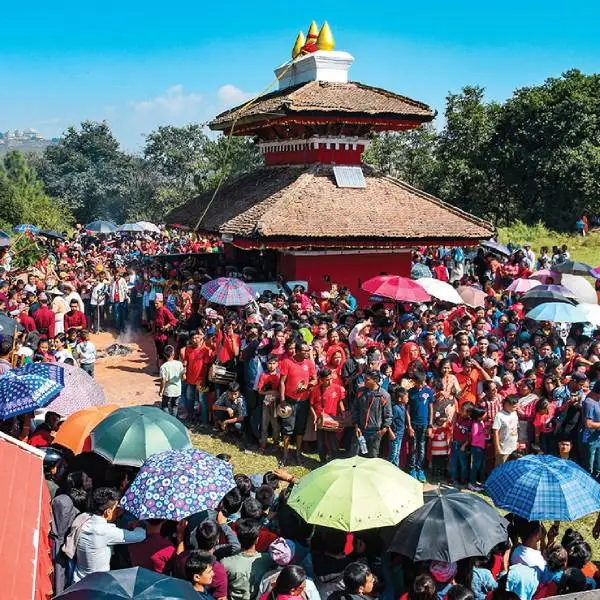
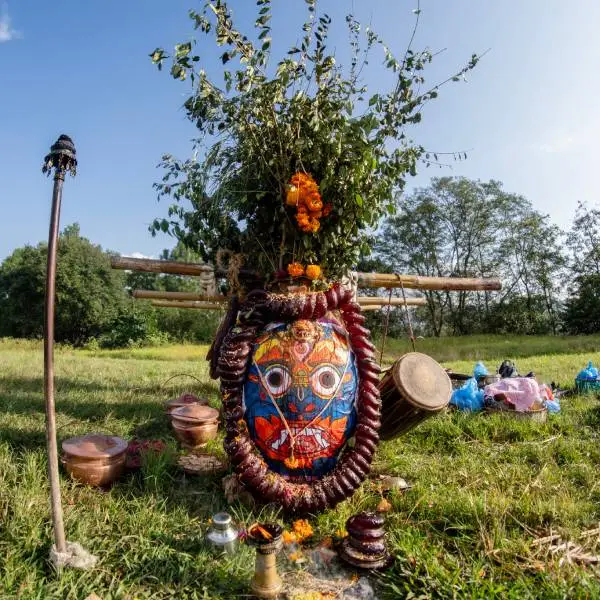
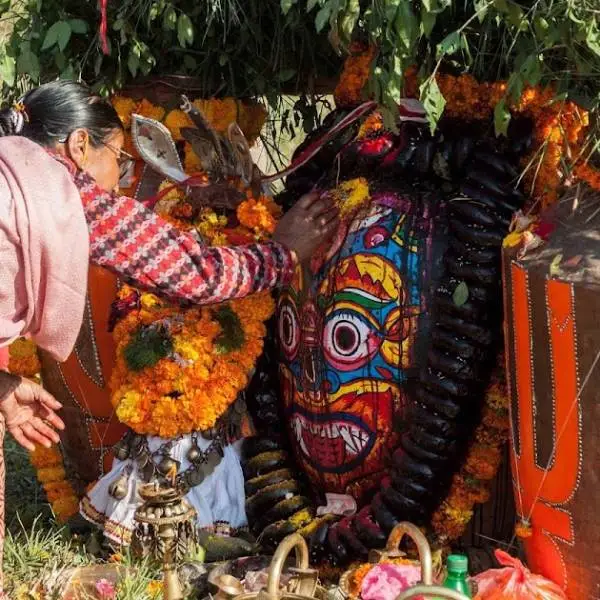
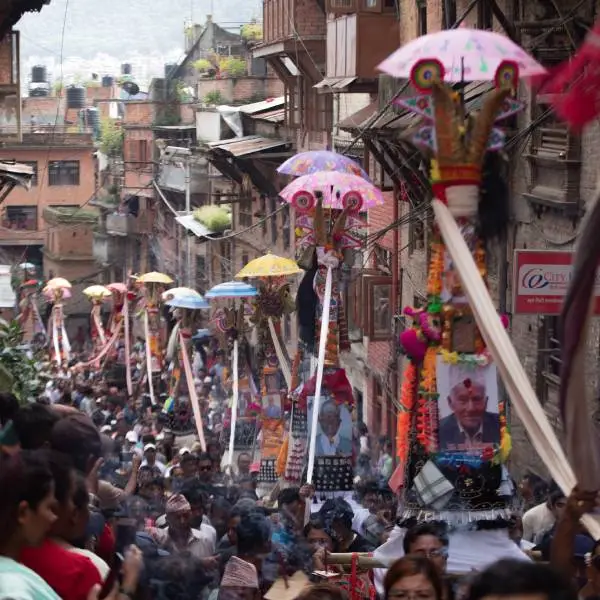
Spanning roughly nine days, the festival is dedicated to the goddess Shikali, who is closely identified with Rudrayani, a female manifestation of Rudra, a fierce aspect of Lord Shiva. The name "Shikali" is thought to derive from "Si-Kali," meaning "the Kali of the woods," reflecting the goddess's association with the wild, untamed periphery beyond the village's cultivated fields. This geographic symbolism plays out literally during the festival's central ritual: a procession that carries the goddess's chariot from the ordered heart of the village to the Sikali Temple, situated on a grassy hill roughly fifteen minutes' walk outside Khokana, surrounded by paddy fields with views toward the Chandragiri and Champadevi hills. This journey is understood locally as a way of ritually reclaiming agricultural land, purifying the fields, and honoring the necessary relationship between the settled village and the wilderness that surrounds it.
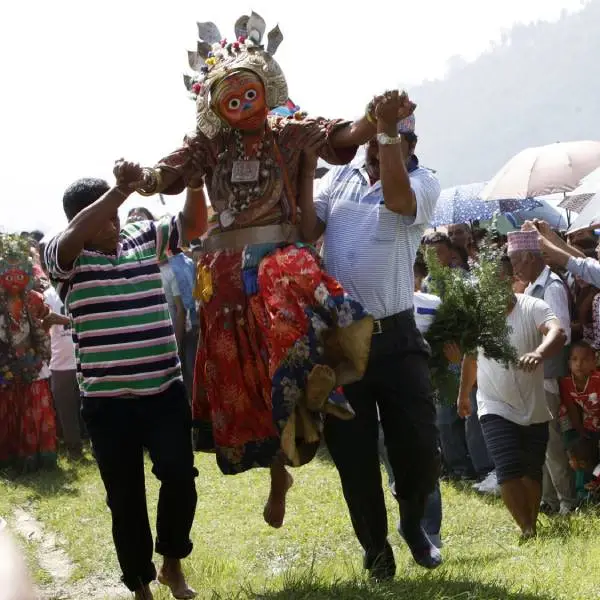
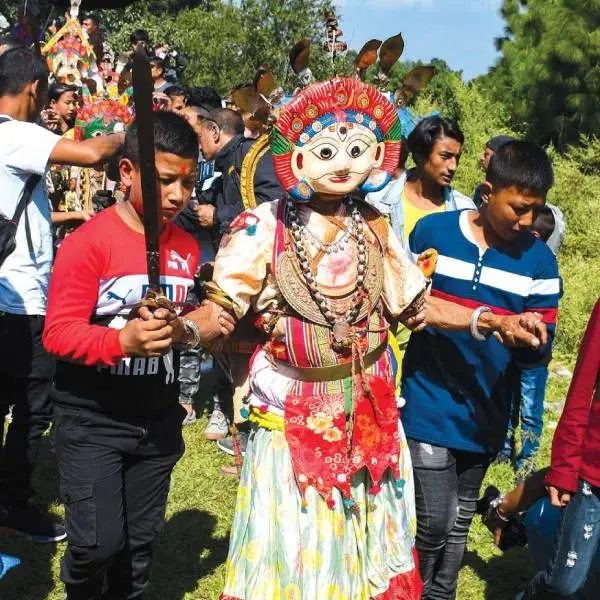
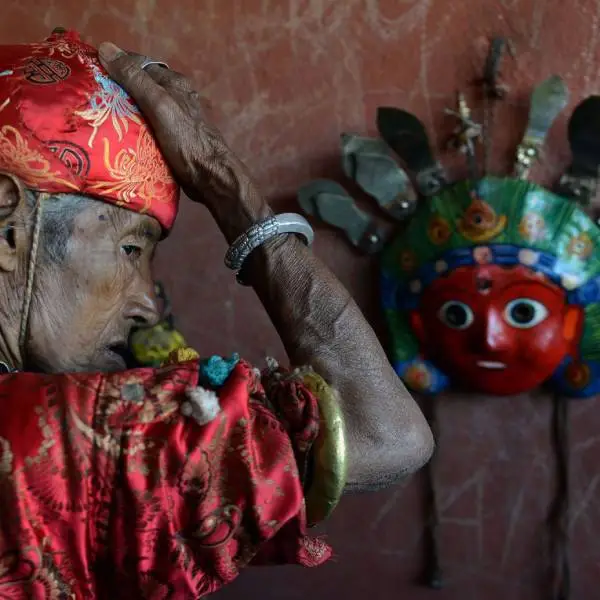
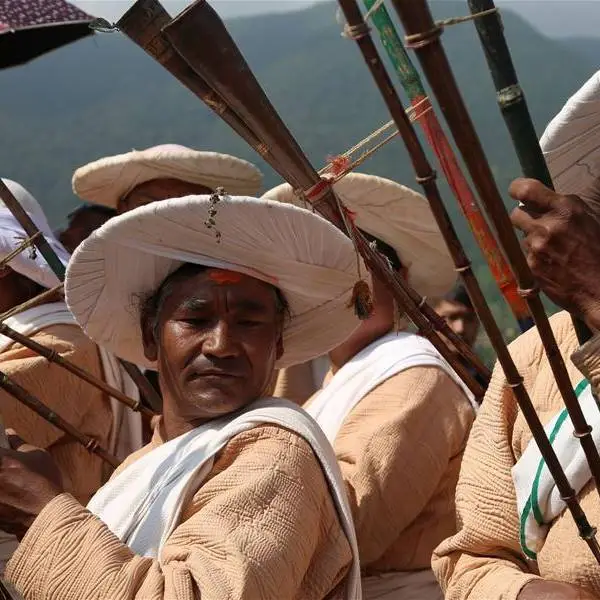
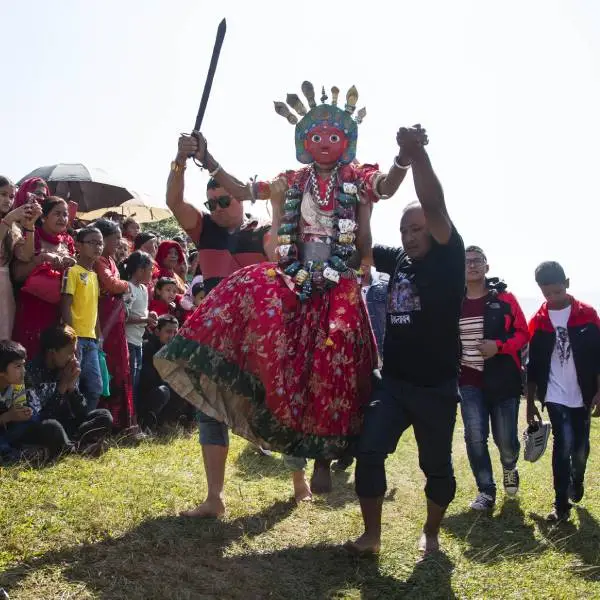
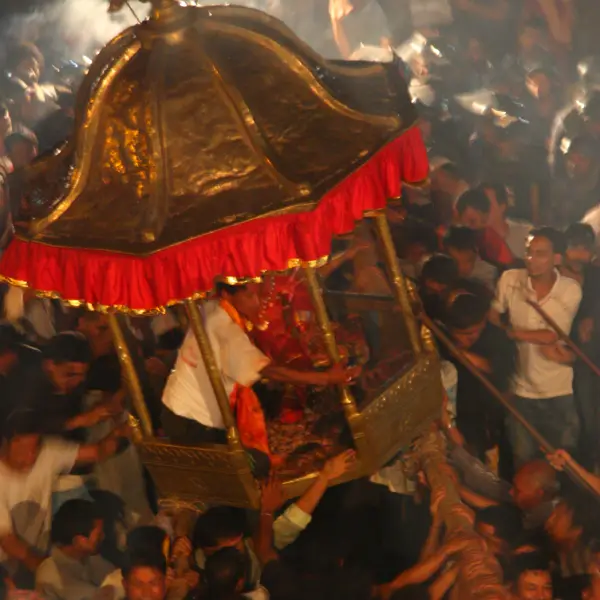
The festival unfolds through a sequence of distinct ritual days. On the fifth day, the idol of Rudrayani is removed from her temple and paraded through Khokana's streets atop a wooden chariot, led by Newar priests dressed in white ritual costumes, before being enshrined at the Shikali Temple, where she remains until the eighth day of the festival. The following day features one of the festival's most visually striking elements, as fourteen members of what is known as the Rudrayani Devgan, or Squad of Rudrayani, don elaborately painted masks representing fourteen different Hindu deities, dressed in vividly colored attire, performing ritual dances around the temple grounds. Alongside the masked performances, the festival also incorporates elements of tantric ritual, including secret ceremonies performed by a small group of young boys chosen for the role, as well as a fire-crossing ceremony and the distribution of ceremonially blessed rice, or prasad, believed to carry healing properties.
Beyond its religious significance, the Shikali Jatra offers a window into Khokana's distinctive cultural identity within the wider Newar community. Once notable as the first village in Nepal to receive electricity in 1911 under the rule of Chandra Shamsher Rana, and historically known for its production of traditional mustard oil, Khokana has largely retained its rural, agrarian character even as much of the surrounding Kathmandu Valley has urbanized. The village's largest temple, dedicated to Rudrayani and built in the traditional three-tiered pagoda style, remains the spiritual center of daily life, with the nearby pond known as De Pukhu hosting yet another local tradition, the playful "Goat Festival," held during the separate celebration of Gai Jatra.
For travelers seeking an authentic, community-rooted alternative to Nepal's more widely publicized festivals, the Shikali Jatra offers a rare opportunity to witness a living tradition that has quietly persisted for centuries, largely undisturbed by outside influence, preserving a distinctly Newar vision of devotion, ritual, and the enduring bond between village and wilderness.