Bhindyo Jatra
Bhindyo Jatra, also called Bhimsen Jatra, is a distinctive religious celebration held in Patan, Lalitpur, and is especially meaningful to Newar traders, shopkeepers, and business families. The festival is dedicated to Bhimsen, locally known as Bhindyo, who is respected not only for his strength but also as a guardian of trade, prosperity, and successful enterprise. During the celebration, the historic surroundings of Patan Durbar Square and nearby neighborhoods become filled with incense, music, prayer, and processions, giving visitors a close look at one of the city’s long-standing living traditions.
In Hindu tradition, Bhimsen is widely known as one of the five Pandava brothers from the Mahabharata. Within Newar culture, however, his role has developed in a more local and practical direction. He is strongly connected with commerce and business, which is why many merchants and shop owners offer prayers to him for stability, progress, and protection in their work. This close relationship between religion and livelihood gives Bhindyo Jatra a character that is deeply rooted in the everyday history of Patan.
The celebration takes place according to the lunar calendar during the month of Bhadra, generally falling around August or September. Religious activities are centered around the Bhimsen Temple in Mangal Bazaar, which stands near Patan Durbar Square. On the festival day, devotees arrive from early morning carrying flowers, sweets, incense, lamps, and other offerings. Many business families visit the temple specifically to seek blessings for their shops, enterprises, and future prosperity.
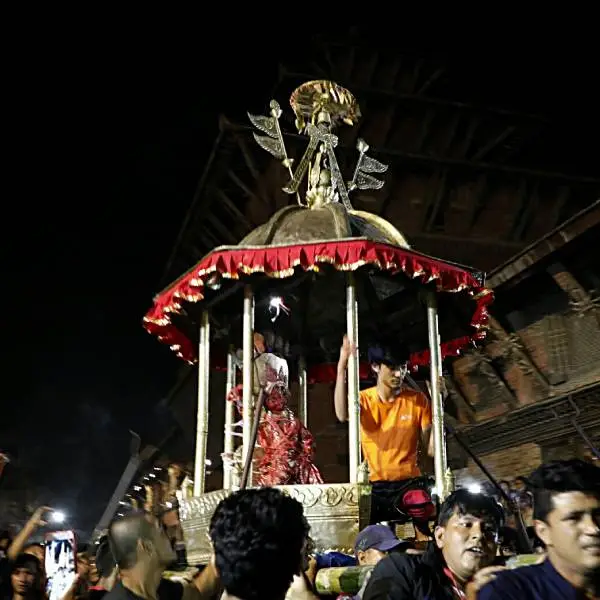
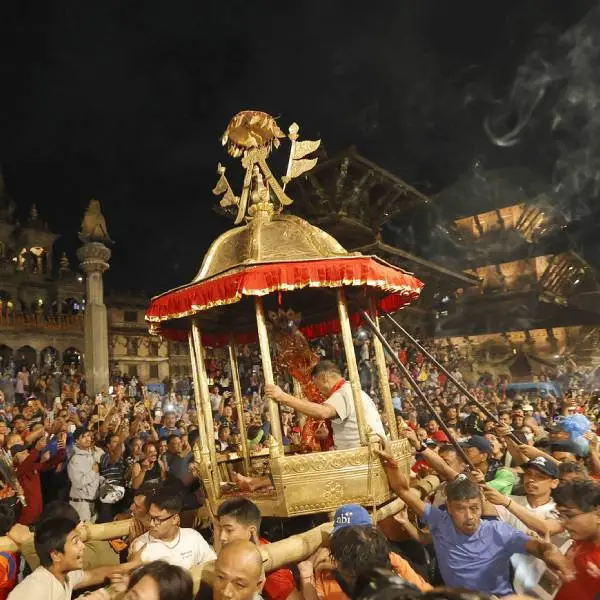
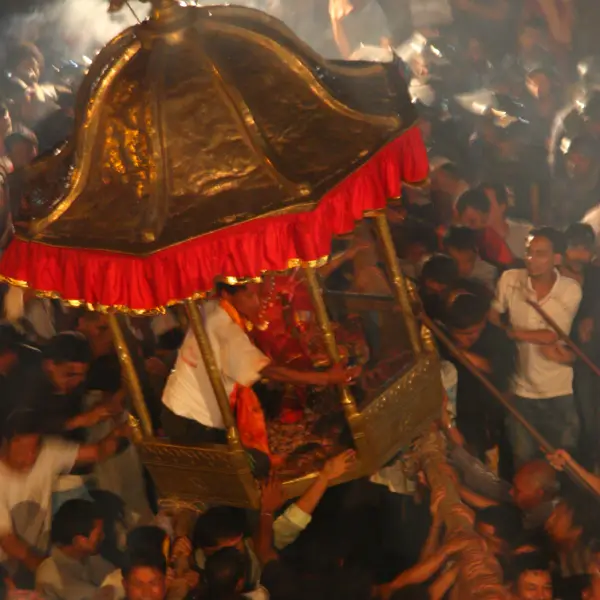
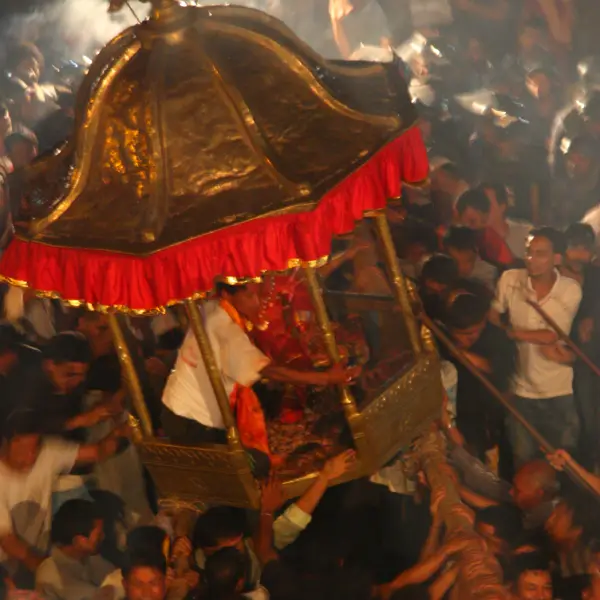
The atmosphere gradually becomes more energetic as the day progresses. Traditional Newar music begins to fill the surrounding streets, while groups of devotees prepare for the main procession. The sacred image of Bhimsen is ceremonially brought from the temple and placed on a decorated khat, a traditional structure carried by devotees. This marks the beginning of one of the most important moments of the festival.
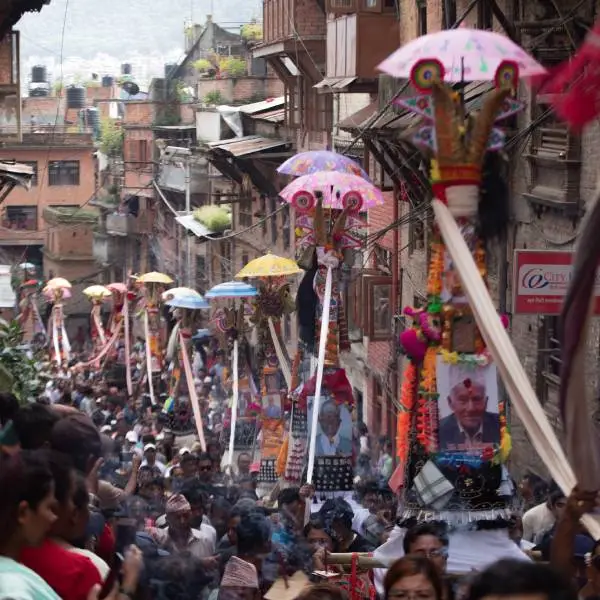
As the procession moves through the old quarters of Patan, the city itself becomes part of the ritual. The sacred image passes through historic lanes, courtyards, market streets, and residential areas, accompanied by musicians, worshippers, and local community members. Drums, cymbals, horns, chanting, and the scent of incense create a strong sensory atmosphere as the procession travels through different neighborhoods.
Residents often gather along the route to watch the procession, offer prayers, and show respect as Bhimsen passes by. For many families, the festival is not simply something to observe but a tradition they have participated in for generations. Some households prepare offerings, while others join the procession or support the musicians and organizers. This collective participation helps preserve the festival and keeps its meaning closely connected with local community life.
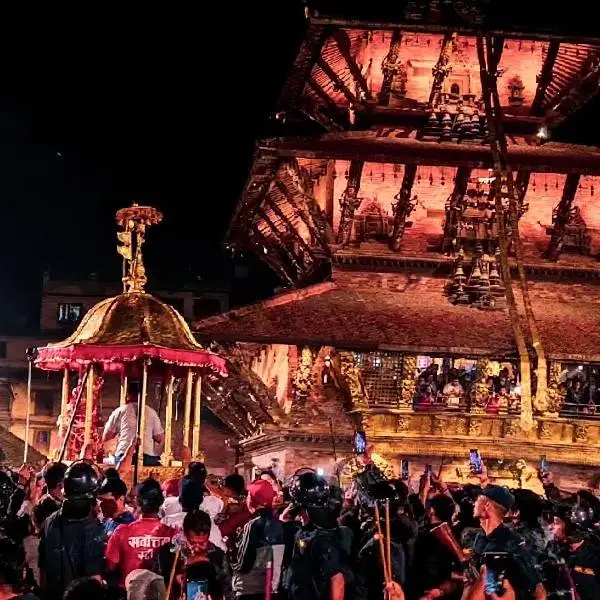
The streets of Patan are especially suited to this type of celebration. Narrow brick lanes, old courtyards, pagoda temples, carved windows, and traditional houses create a setting where the past and present naturally come together. During Bhindyo Jatra, these everyday spaces take on a sacred role, demonstrating how Newar religious traditions are woven directly into the urban landscape.
One of the most important aspects of the festival is the involvement of the merchant community. Bhimsen has long been regarded as a protector of trade, and many business owners consider the festival an important occasion for expressing gratitude and asking for continued success. Offerings may be made with hopes for financial stability, honest business, protection from difficulties, and growth in the coming year.
Traditional music is another defining feature of Bhindyo Jatra. Newar musical groups accompany the procession with instruments that have been used in religious and community ceremonies for generations. The rhythm of the drums and cymbals helps guide the procession while also creating a strong connection between ritual, performance, and local identity.
For travelers, the festival provides a very different impression of Patan compared with an ordinary sightseeing visit. Patan Durbar Square may be known for its architecture and heritage monuments, but Bhindyo Jatra reveals how these spaces are still actively used by local communities. Watching a sacred procession move through centuries-old streets shows that Patan’s heritage is not limited to historic buildings; it remains alive through worship, music, family traditions, and community participation.
Visitors should remain respectful throughout the event. The route can become crowded, particularly when the procession enters narrow streets, so it is important to avoid blocking the path or standing too close to those carrying the sacred structure. Photography is usually possible from public areas, but close-up photographs of worshippers, priests, musicians, or private rituals should be taken only with permission.
The festival may continue into the evening, when lamps, music, incense, and the movement of the procession create an especially atmospheric setting in old Patan. Travelers who plan to attend should confirm the local schedule in advance because the exact timing and route may change from year to year.
At its core, Bhindyo Jatra in Nepal is a celebration of faith, livelihood, cultural continuity, and community identity. It reflects the important place Bhimsen holds within Newar commercial traditions while also preserving music, ritual practices, procession customs, and neighborhood participation. For visitors interested in Nepal beyond its monuments and mountain scenery, Bhindyo Jatra offers a meaningful opportunity to witness a tradition that continues to connect Patan’s history with the everyday lives of its people.