Nawa Durga Jatra (Dhulikhel)
Perched on a ridge in the eastern part of the Kathmandu Valley, the historic Newar town of Dhulikhel is home to one of Nepal's most vibrant regional expressions of Durga worship: the Nawadurga Jatra. While Bhaktapur's version of this festival is perhaps the most widely documented, Dhulikhel's own Nawadurga tradition holds equally deep significance for the local community, reflecting the town's long history as an important trading and cultural center along the ancient route connecting the Kathmandu Valley to Tibet.
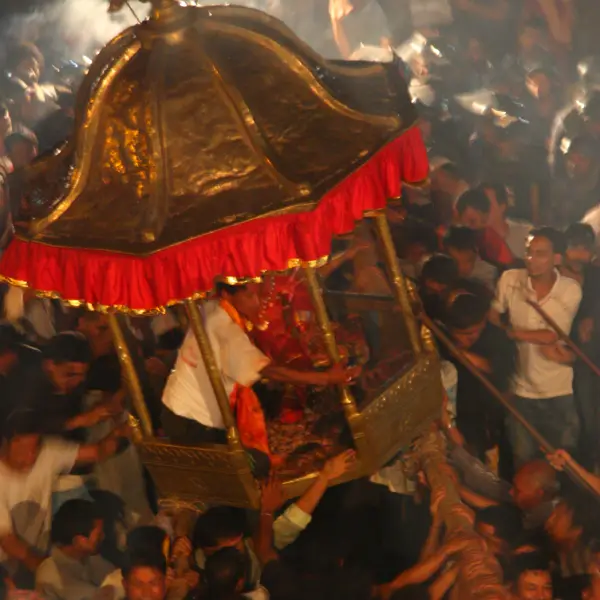
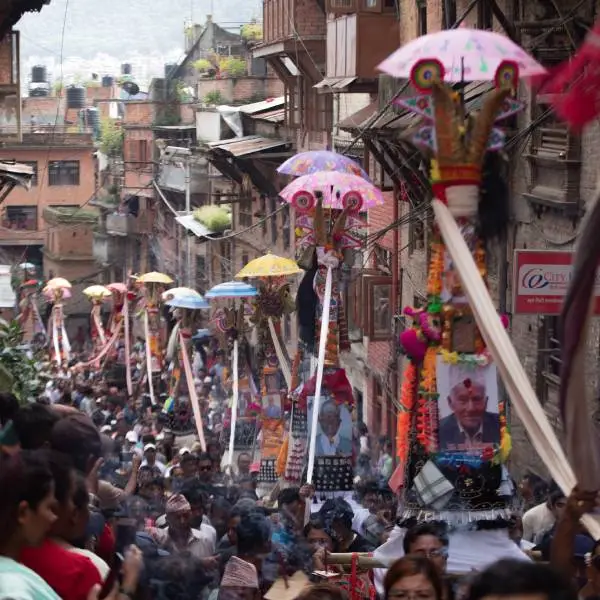
The festival is dedicated to the worship of the Hindu goddess Durga in her nine distinct manifestations, collectively known as the Navadurga or Nawadurga. Each of these forms embodies a different facet of Shakti, the divine feminine power believed to protect, nurture, and, when necessary, destroy evil to preserve cosmic balance. In Dhulikhel, this reverence takes shape through grand processions in which idols representing the nine goddesses are carried through the town's narrow, winding streets, streets that have changed relatively little in character since the town's founding centuries ago.
In preparation for the procession, the idols are lovingly adorned with vividly colored clothing, intricate jewelry, and fragrant flower garlands, transforming them into resplendent focal points of devotion. Local priests and designated ritual custodians, often drawn from specific families with generations-long ties to the temple, oversee the preparation of the idols, ensuring that every ritual detail is observed according to tradition. As the procession moves through the town, devotees line the streets, offering prayers, lighting incense, and making offerings of rice, flowers, and vermilion powder in the hopes of receiving the goddess's blessings for health, prosperity, and protection from misfortune.
The atmosphere throughout the festival is one of both solemn devotion and lively celebration. Traditional Newari music accompanies the processions, with musicians playing drums, cymbals, and wind instruments that create a rhythmic, almost trance-like backdrop for the ritual movements. Dance performances, often depicting mythological episodes from the goddess's battles against demonic forces, add a dramatic and theatrical dimension to the event, drawing large crowds of onlookers who gather in the town's historic squares to watch. These performances serve not only as entertainment but as a form of oral and visual storytelling, passing down religious narratives to younger generations in a manner far more memorable than written texts alone.
Beyond its religious core, the Nawadurga Jatra functions as an important occasion for community bonding in Dhulikhel. Extended families reunite for the festival, neighbors collaborate on the logistics of organizing processions and preparing ritual offerings, and local vendors set up stalls selling traditional snacks, sweets, and religious items along the procession route. For many residents, the festival is as much a celebration of collective identity and continuity as it is an act of worship, a reaffirmation of the town's unique cultural heritage amid the broader currents of modernization sweeping through the Kathmandu Valley.
Dhulikhel's elevated position, offering sweeping views of the Himalayan range on clear days, has increasingly made it a popular destination for both domestic and international visitors seeking an escape from the congestion of Kathmandu. Travelers who happen to be in the area during the Nawadurga Jatra are afforded a rare opportunity to witness an authentic, community-rooted religious festival that has largely retained its traditional character, unlike some of the more heavily commercialized festivals found closer to the capital. The relatively smaller scale of the Dhulikhel celebration, compared to its Bhaktapur counterpart, often allows visitors a more intimate and immersive experience of the rituals and processions.
The Nawadurga Jatra also reflects the broader religious landscape of Nepal, where Hindu and indigenous Newar traditions have historically intertwined and influenced one another over centuries of coexistence. The specific forms of the Navadurga worshipped in Dhulikhel, along with the particular rituals and musical traditions associated with the local celebration, offer insight into how devotion to a shared pantheon of deities can take on distinct regional characteristics depending on local history, geography, and cultural influence.
Ultimately, the Nawadurga Jatra in Dhulikhel stands as a powerful testament to the enduring strength of community-based religious tradition in Nepal. Through vibrant processions, sacred music, and heartfelt devotion, the people of Dhulikhel continue to honor the divine feminine energy of Goddess Durga, ensuring that this centuries-old celebration remains as meaningful and alive today as it was for the generations who first established it.