Nag Panchami
Nag Panchami is a sacred Hindu festival celebrated in Nepal to honor Nag Devata (serpent deities) and express gratitude toward snakes, which hold an important place in Hindu and Buddhist traditions. Observed on the fifth day (Panchami) of the bright fortnight of the Nepali month of Shrawan (July–August), the festival is associated with protection, nature, fertility, and spiritual harmony. On this day, devotees worship images and representations of snakes by offering milk, flowers, incense, and prayers. The festival reflects the deep connection between Nepalese culture and the natural world, where snakes are respected not only as creatures of the earth but also as powerful spiritual beings believed to protect water sources, land, and communities.
The tradition of Nag Panchami is based on various Hindu legends and ancient beliefs surrounding the divine power of serpents. One popular story connects the festival with the Nagas, mythical serpent beings believed to control rainfall and water resources. According to Hindu mythology, Nagas are guardians of rivers, lakes, and underground treasures, and honoring them is believed to bring protection from natural disasters and misfortune. Another legend tells of a farmer who accidentally killed young snakes while ploughing a field. In anger, the mother serpent sought revenge by harming the farmer’s family, but after sincere prayers and offerings were made to the Nagas, forgiveness was granted. This story emphasizes the importance of respecting all forms of life and maintaining harmony between humans and nature.
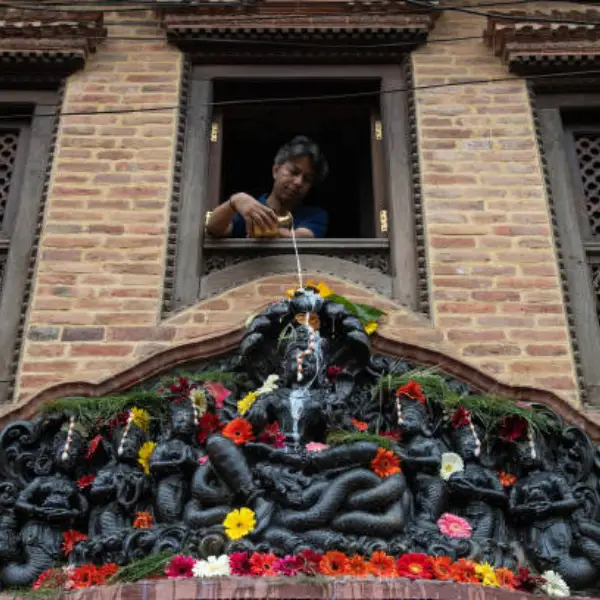
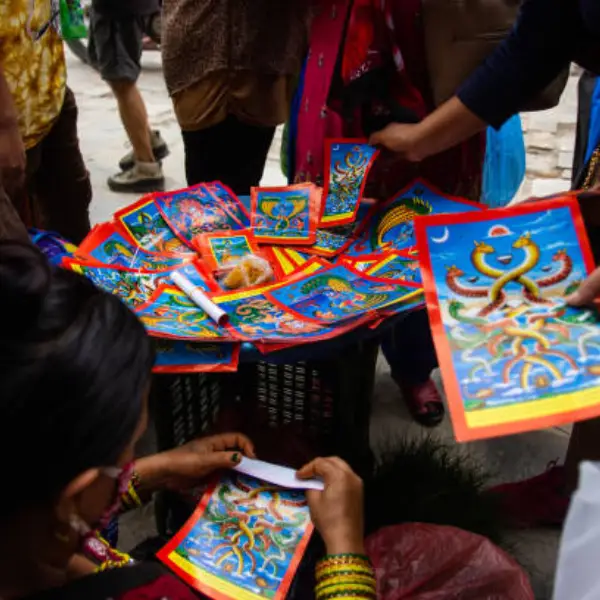
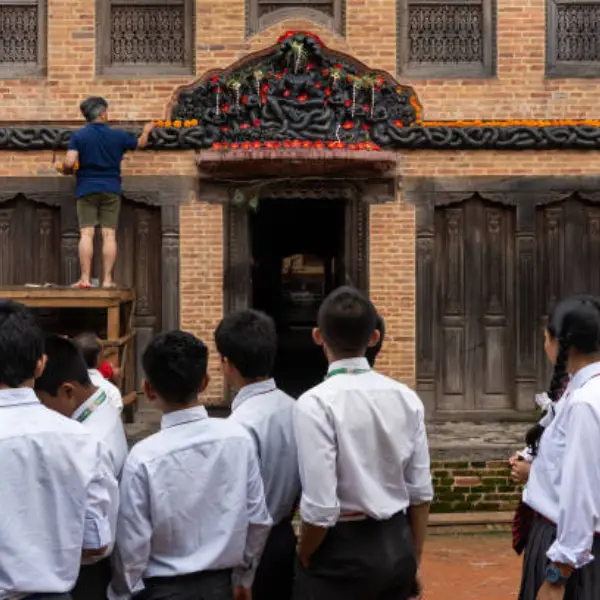
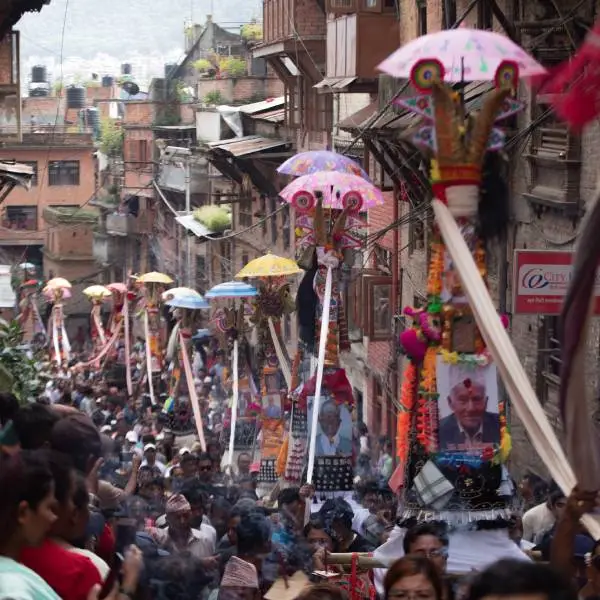
Nag Panchami is celebrated throughout Nepal with various rituals and customs. On the festival day, devotees place pictures or clay images of Nagas above the entrances of their homes as a symbol of protection. These images are worshipped with offerings of milk, water, flowers, fruits, incense, and traditional foods. Many people visit temples dedicated to serpent deities and perform prayers seeking blessings for family safety, prosperity, and good fortune. Some devotees also observe fasting and participate in religious ceremonies conducted by priests. In rural areas, people often worship natural water sources such as ponds, wells, and springs, believing that these places are connected with the spiritual presence of Nagas.
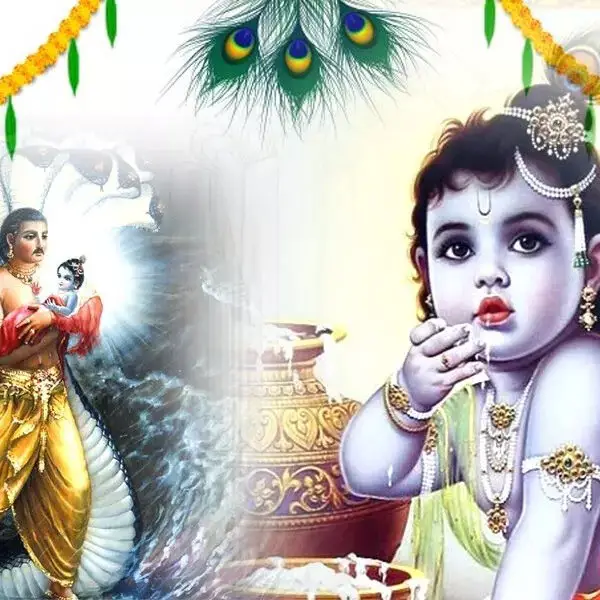
Snakes hold significant importance in both Hindu and Buddhist mythology. In Hindu traditions, Nagas are often associated with powerful deities and cosmic forces. Shesha Naga, the thousand-headed serpent, is believed to serve as the resting place of Lord Vishnu, while Vasuki Naga appears in the famous legend of the churning of the ocean of milk. Nagas are also linked with fertility, rain, and protection of sacred places. In Buddhist traditions, serpents are often regarded as protectors of spiritual teachings. According to Buddhist legends, Mucalinda Naga sheltered Lord Buddha from a storm while he was meditating, symbolizing protection, wisdom, and devotion. These beliefs demonstrate the shared cultural importance of serpent symbolism across Nepal's religious traditions.
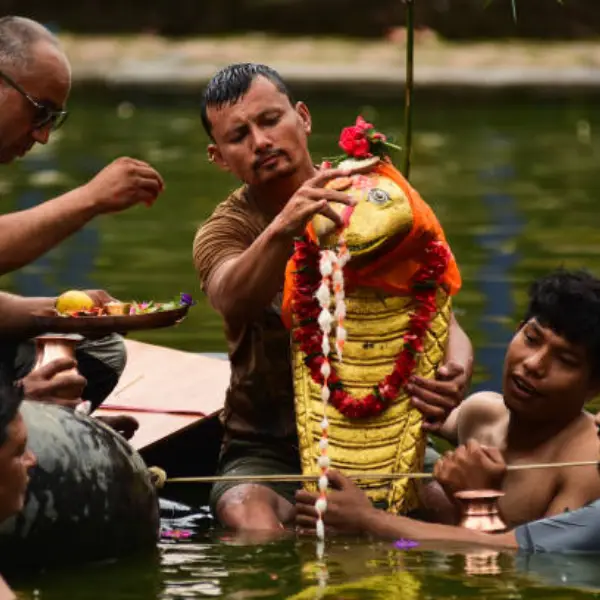
One of the most well-known places to experience Nag Panchami in Kathmandu is Naga Pokhari, a historic pond located near the central area of the city. During the festival, devotees gather around the pond to offer prayers and perform rituals dedicated to the serpent deities. The area becomes filled with religious activities as people bring offerings, light incense, and seek blessings. Other important locations associated with Nag worship include Taudaha Lake in Kathmandu and various temples and ponds throughout the Kathmandu Valley. These sites provide a fascinating glimpse into Nepal's traditional relationship with sacred landscapes and natural elements.
For travelers, Nag Panchami offers a unique opportunity to experience Nepal's spiritual traditions and cultural beliefs. Visitors can observe devotees performing rituals at Naga Pokhari, Taudaha Lake, and local temples while learning about the symbolism of serpent worship in Nepalese society. The festival can be combined with visits to Kathmandu's heritage sites, including nearby temples and historic neighborhoods. Travelers should dress respectfully when visiting religious places, avoid disturbing ceremonies, and ask permission before photographing worshippers or rituals. A local guide can provide deeper insight into the legends, customs, and religious significance behind the festival.
Nag Panchami is more than a festival dedicated to snakes—it represents respect for nature, protection, and the balance between humans and the environment. Through ancient stories, religious rituals, and community traditions, the festival continues to preserve Nepal's rich cultural heritage. For visitors, experiencing Nag Panchami provides a meaningful opportunity to understand Nepal's spiritual connection with nature and the traditions that continue to shape everyday life.