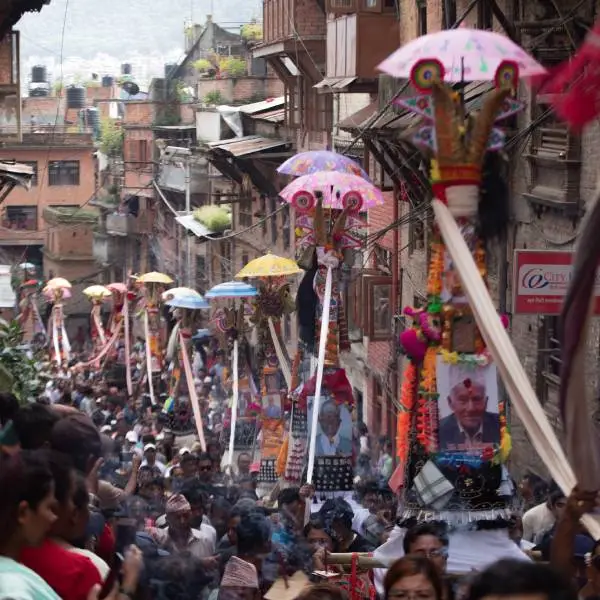
Kartik Nach
Kartik Nach, also known as Kartik Naach or Kartik Dance, is one of the Kathmandu Valley’s most remarkable surviving performance traditions. Staged in the historic city of Patan in Lalitpur, the festival blends ritual dance, theatre, music, mythology, elaborate costumes, and community participation into an extraordinary cultural experience. Performances traditionally take place at Kartik Dabali in Patan Durbar Square, where the architecture of the old royal city creates a dramatic setting for stories that have been performed for generations.
The tradition dates back nearly four centuries to the reign of King Siddhi Narsingh Malla, one of Patan’s important Malla-period rulers and patrons of art and religion. Historical accounts place the beginning of Kartik Nach in Nepal Sambat 761, during the seventeenth century. What began under royal patronage gradually developed into an enduring cultural institution involving dancers, musicians, religious specialists, actors, craftspeople, and families who have helped preserve its performance knowledge across generations.
Kartik Nach is much more than a sequence of traditional dances. It functions as a dramatic form of storytelling in which religious narratives, moral lessons, humour, and theatrical expression are brought to life through movement and music. Performances draw upon Hindu sacred traditions and stories connected with texts and legends familiar to communities of the Kathmandu Valley. Individual episodes can introduce divine figures, demons, kings, ordinary people, and symbolic characters, allowing audiences to experience religious and ethical stories through performance rather than written explanation.
One of the most anticipated performances is the Narasimha episode, which portrays the dramatic defeat of Hiranyakashipu. In Hindu tradition, Narasimha is the powerful man-lion manifestation of Vishnu who appears to protect the devotee Prahlada and overcome the demon king. During Kartik Nach, this story becomes a visually intense theatrical event involving ceremonial costumes, expressive movement, masks, rhythmic music, and a carefully structured dramatic sequence. For many spectators, the Narasimha performance is among the most striking moments of the festival.
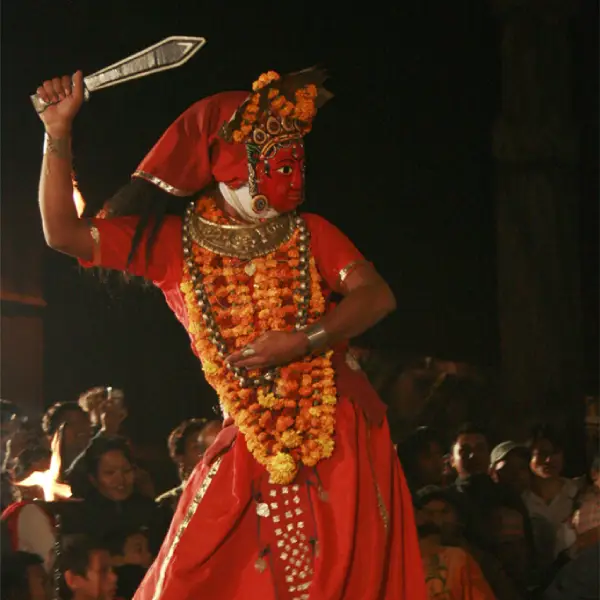
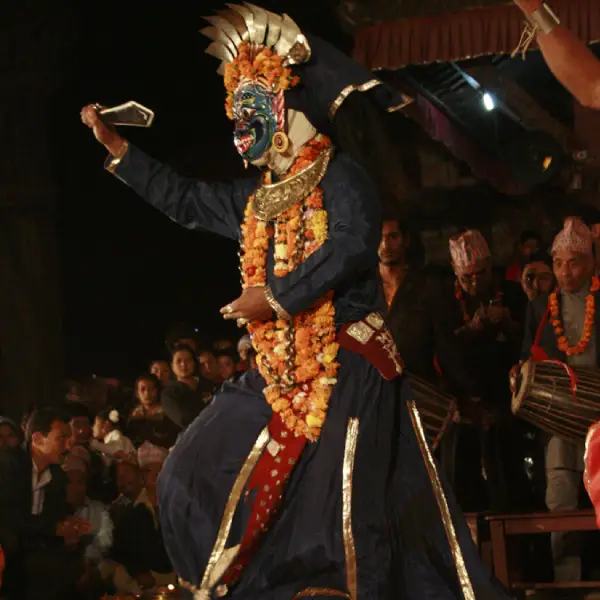
Costume and visual presentation are essential to the character of Kartik Nach. Performers may appear in richly decorated clothing, ceremonial headpieces, masks, jewelry, garlands, and theatrical makeup designed to distinguish gods, demons, royal figures, and other characters. Movement is supported by traditional musicians whose drums and other instruments guide the rhythm and emotional intensity of each scene. The combination of music, dance, costume, and storytelling turns Kartik Dabali into a living stage surrounded by the temples and historic buildings of Patan Durbar Square.
Although the festival is strongly rooted in religion, it also reflects the extraordinary artistic heritage of the Newar communities of the Kathmandu Valley. Patan has long been associated with metalwork, wood carving, architecture, painting, music, dance, and ritual performance. Kartik Nach brings several of these cultural traditions together in a single event, demonstrating how performing arts can preserve stories, beliefs, artistic skills, and social memory at the same time.
The length of the festival has changed considerably over its history. Earlier forms were performed for much longer periods, while modern presentations are often shortened because staging the complete tradition requires substantial numbers of artists, musicians, organizers, resources, and preparation. Recent editions have commonly followed a shorter format, including a ten-day presentation in 2024 and 2025. Despite these changes, preservation groups and participating communities continue working to keep the tradition alive.
For travelers, experiencing Kartik Nach offers something very different from visiting Patan Durbar Square during ordinary sightseeing hours. As evening performances begin, the historic square becomes an active cultural space rather than simply an architectural landmark. Residents gather around the performance area, musicians take their places, performers enter in ceremonial dress, and stories associated with the city’s religious and artistic history unfold before a live audience.
Photography can be rewarding because the performances feature dramatic costumes, movement, masks, firelight, musicians, and the historic surroundings of Patan. Visitors should nevertheless remember that Kartik Nach carries religious and cultural significance for the local community. Blocking the audience, stepping into performance areas, disturbing musicians, or using intrusive photography should be avoided. Arriving early also allows visitors to secure a good viewing spot while being respectful of local spectators.
The festival normally takes place during the Nepali month of Kartik, corresponding broadly with October and November. Exact performance dates and the number of festival days can vary from year to year, so travelers planning a visit should confirm the current schedule before arranging their itinerary.
At its heart, Kartik Nach represents the rich cultural heritage and enduring traditions of Patan, keeping its history and collective memory alive through generations. Its importance lies not only in the beauty of the dance but also in the continued transmission of mythology, music, ritual knowledge, costume traditions, and theatrical skills from one generation to another. Watching the performance within Patan Durbar Square offers travelers a rare chance to experience Nepalese heritage not behind museum glass, but alive through movement, sound, devotion, and community participation.