Gunla Parva (गुंला पर्व)
Gunla Parva is one of the most spiritually significant observances within the Newar Buddhist tradition of the Kathmandu Valley. Rather than being celebrated on a single day, Gunla is observed over an entire sacred month devoted to prayer, reflection, pilgrimage, music, generosity, and religious practice. During this period, Newar Buddhist communities strengthen their connection with Buddhist teachings through daily rituals, temple visits, scripture recitation, and collective acts of devotion. The month usually falls during the monsoon season and transforms many historic neighborhoods of Kathmandu and Lalitpur into deeply atmospheric spaces filled with prayer, traditional music, and early-morning pilgrimages.
In 2026, Journey DMC currently lists Gunla Parva from 13 August to 12 September 2026, giving travelers nearly a month to experience different aspects of this important cultural period. Unlike festivals concentrated around a single procession or ceremony, Gunla develops gradually through repeated daily practices. This makes it especially meaningful for visitors who want to observe Nepalese culture beyond major public celebrations and understand how religion remains integrated into everyday community life in the Kathmandu Valley.
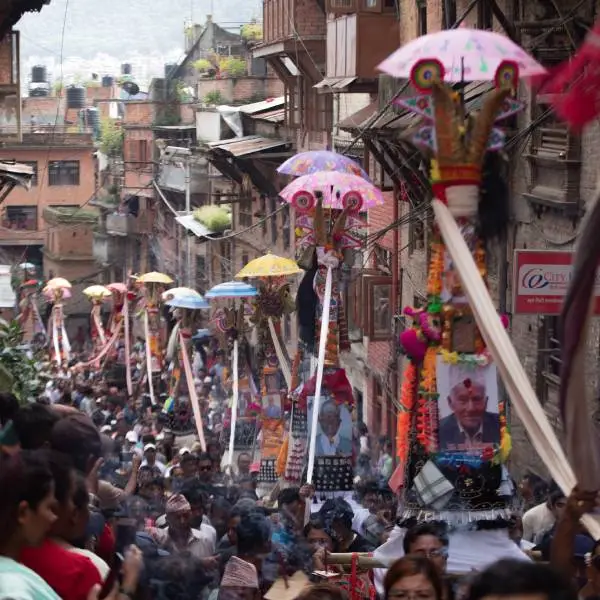
One of the most recognizable traditions of Gunla is the early-morning pilgrimage made by Newar Buddhist devotees to sacred Buddhist sites. Groups often begin their journeys before the city becomes busy, walking through old streets and traditional neighborhoods toward stupas, chaityas, bahals, and monasteries. Swayambhunath is among the most important pilgrimage destinations during this period, while Boudhanath and numerous smaller Buddhist shrines throughout Kathmandu and Patan also form part of devotional routes. These walks are not simply journeys between religious sites; they are acts of faith, discipline, remembrance, and community participation.
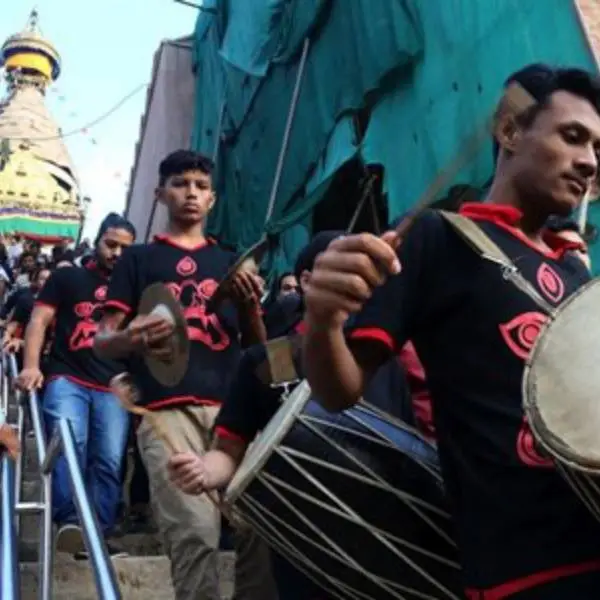
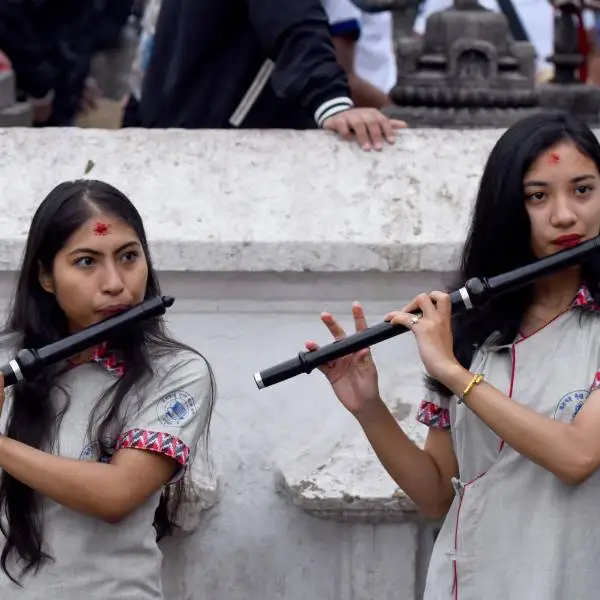
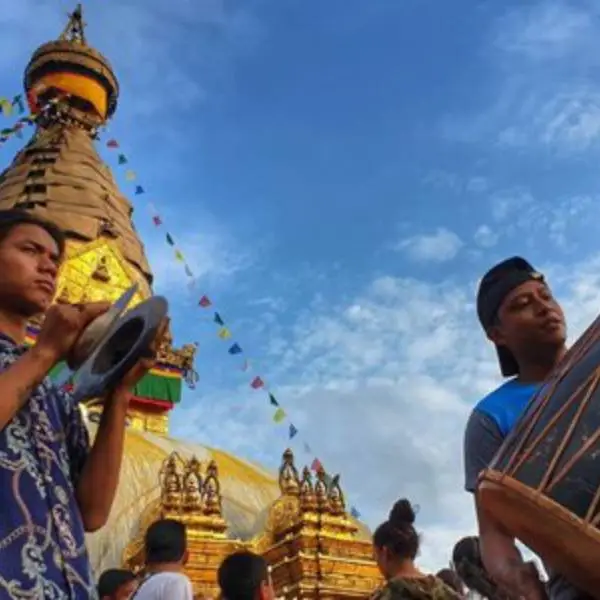
The atmosphere of Gunla is strongly shaped by Gunla Bajan, the traditional devotional music performed by Newar Buddhist groups. Musicians accompany pilgrimages through narrow streets while playing traditional drums, cymbals, flutes, horns, and other instruments associated with Newar musical heritage. The sound of these ensembles can often be heard in the early morning, especially around older neighborhoods and Buddhist pilgrimage routes. The music adds a powerful emotional and spiritual dimension to the observance and helps preserve an artistic tradition that has been passed from generation to generation.
Gunla is historically connected with the ancient Buddhist rainy-season retreat, commonly associated with the period when monks remained in one place during the monsoon to study, meditate, teach, and avoid unnecessary travel. Over time, Newar Buddhist communities developed their own distinctive practices around this sacred period. Lay devotees participate by visiting religious sites, reciting Buddhist scriptures, observing fasting or other forms of discipline, lighting lamps, making offerings, and performing charitable acts. These traditions reinforce the festival's emphasis on spiritual reflection, compassion, merit, and personal responsibility.
Acts of generosity also hold an important place during Gunla. Families and community members may offer food, donations, religious items, or other forms of assistance as part of their devotional practice. The idea of giving is closely connected with Buddhist teachings about compassion and the accumulation of merit. These charitable activities show that Gunla is not limited to prayer and ritual but also encourages devotees to express their faith through practical acts of kindness toward monks, community members, and people in need.
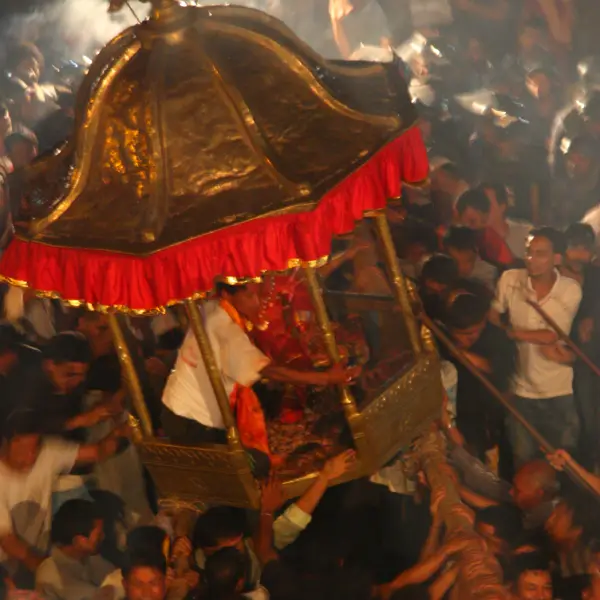
Visual religious traditions are another important part of the Gunla period. Buddhist images, sacred statues, manuscripts, and traditional Paubha paintings may be displayed during special occasions, allowing devotees to view religious artworks that are not always publicly accessible. Ceremonial processions and displays of sacred images help connect artistic heritage with religious practice. For travelers interested in Buddhist art, Newar craftsmanship, and traditional iconography, these events can provide a deeper understanding of the relationship between spirituality and visual culture in the Kathmandu Valley.
Swayambhunath becomes particularly important during Gunla because large numbers of devotees visit the sacred hilltop complex to pray, circumambulate the stupa, make offerings, and participate in devotional activities. The early morning hours can be especially atmospheric, with pilgrims climbing toward the stupa while traditional music echoes through the surroundings. Prayer wheels, incense, butter lamps, devotional music, and groups of worshippers combine to create a distinctive environment that reflects the living Buddhist heritage of Kathmandu.
Gunla can also be experienced in the historic Buddhist courtyards known as bahals and bahis found throughout Kathmandu and Lalitpur. These spaces have served as important centers of Newar Buddhist community life for generations. During the sacred month, they may host prayers, religious gatherings, music, scripture readings, offerings, and displays of sacred objects. Exploring these traditional courtyards can help visitors understand that Newar Buddhism is not practiced only at famous monuments but also within smaller neighborhood spaces deeply connected to family and community identity.
For travelers, the best way to appreciate Gunla is to approach it as a living religious tradition rather than a staged festival. Many of its most meaningful moments happen early in the morning and within local communities rather than at large tourist venues. Walking through older sections of Kathmandu or Patan during the sacred month may reveal small devotional processions, musicians moving between shrines, families making offerings, monks conducting rituals, and devotees quietly visiting chaityas and temples.
Because Gunla often falls during Nepal's monsoon season, visitors should prepare for changing weather conditions. Early mornings may be humid, cloudy, or rainy, and streets can occasionally be wet or slippery. Comfortable walking shoes, light rain protection, and flexible travel plans are useful for those wishing to follow pilgrimage routes or explore historic neighborhoods. The monsoon atmosphere can also add to the visual character of the festival, particularly when mist, temple architecture, incense, lamps, and traditional music combine in the early morning.
Photography during Gunla can be rewarding because the observance includes traditional musicians, Buddhist monuments, religious paintings, prayer lamps, historic courtyards, and processions. However, visitors should remain respectful when photographing worshippers or ceremonies. Permission should be requested before taking close portraits, and photographers should avoid obstructing pilgrimage routes or religious activities. Some rituals may be private or spiritually sensitive, so observing local behavior and following guidance from community members is important.
Traveling with a knowledgeable local guide can greatly improve the experience because many elements of Gunla carry meanings that are not immediately visible to outside visitors. A guide familiar with Newar Buddhist culture can explain the symbolism of different shrines, instruments, rituals, images, and community traditions. This context allows travelers to understand why certain routes are followed, why specific objects are displayed, and how Gunla connects with the broader history of Buddhism in the Kathmandu Valley.
Gunla Parva is especially valuable for travelers interested in spiritual tourism, Buddhist heritage, traditional music, photography, architecture, and local culture. The sacred month provides a different perspective on Nepal by showing how ancient religious practices continue within a modern urban environment. Rather than separating religion from everyday life, Gunla demonstrates how devotion, art, music, family traditions, and community identity remain closely connected.
The cultural importance of Gunla extends far beyond individual ceremonies. The festival helps preserve traditional Newar Buddhist music, religious art, pilgrimage routes, community institutions, and collective memory. Younger generations participate alongside elders, allowing knowledge and traditions to continue across generations. Through these repeated annual practices, Gunla remains an important expression of both Buddhist faith and Newar cultural identity.
For visitors seeking a deeper cultural experience in Nepal, Gunla Parva offers a rare opportunity to witness an extended period of devotion rather than a single-day celebration. Early-morning pilgrimages, Gunla Bajan music, visits to Swayambhunath and other Buddhist sites, charitable activities, religious artwork, and neighborhood rituals together create an experience that is quiet, powerful, and culturally rich. Gunla is ultimately a month of reflection, compassion, discipline, and community devotion that reveals an intimate and enduring side of Nepal's Buddhist heritage.