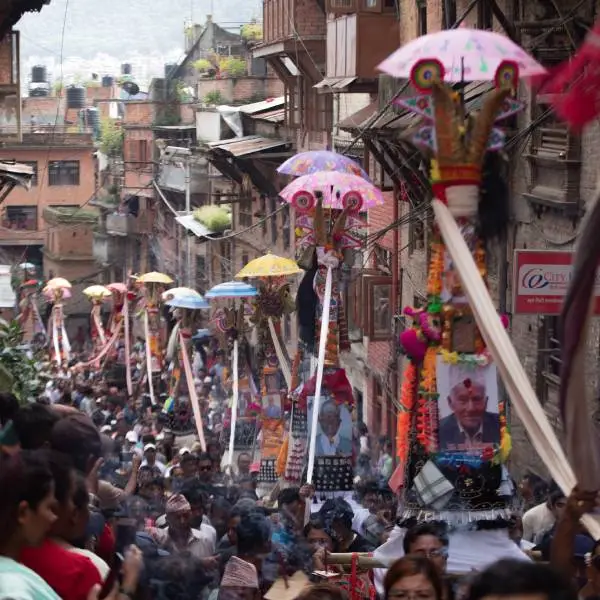
Chatha Puja (चथाः पूजा)
Chatha Puja, known in Nepal Bhasa as Chatha, is a traditional Newar observance dedicated to Lord Ganesh. Celebrated in the Kathmandu Valley during Bhadra Shukla Chaturthi, it falls on the same lunar occasion as Ganesh Chaturthi but carries customs shaped by Newar religious and household traditions. Rather than being centred on enormous public installations and long immersion processions, Chatha is commonly observed through family worship, carefully prepared offerings, visits to Ganesh shrines, and an unusual custom of avoiding the moon. In 2026, Ganesh Chaturthi falls on 14 September in Kathmandu.
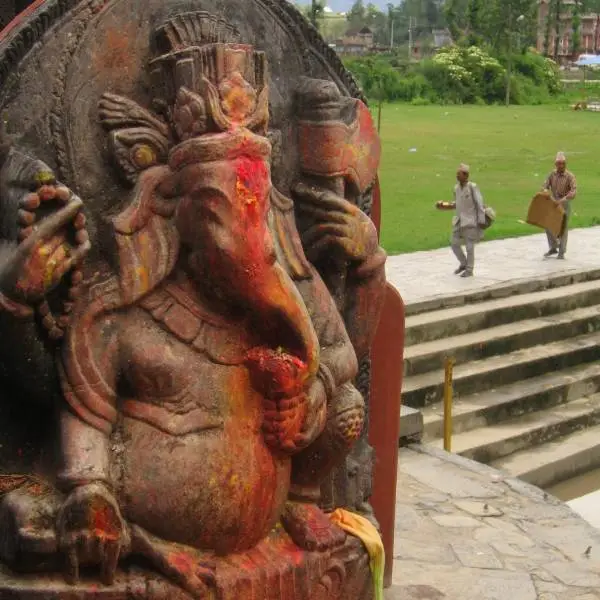
Ganesh occupies an important place in the religious landscape of the Kathmandu Valley. He is approached as a deity of wisdom, success, good fortune, and protection from obstacles. His blessings are traditionally sought before beginning important work, ceremonies, journeys, studies, and other meaningful undertakings. Among Newars, devotion to Ganesh appears within both Hindu and Vajrayana Buddhist cultural settings, illustrating the closely interwoven religious traditions that have developed in the valley over centuries.
Chatha is therefore more than a celebration associated with the birth of Ganesh. For many households, it is a moment to seek an auspicious direction for family life and future responsibilities. Preparations may begin by cleaning the worship space and arranging the items required for the evening ritual. Fruits, grains, seasonal produce, sweets, flowers, incense, lamps, and other foods are placed carefully before the deity. Different families may follow slightly different inherited customs, making the household itself an important place for preserving the festival.
Food has a particularly visible role in the celebration. Newar families prepare combinations of seasonal ingredients and ritual dishes instead of relying on a single standard offering. Traditional accounts of Chatha mention foods such as beaten rice, roasted grains, beans, cucumber, corn, groundnuts, sweets, and items associated with the Newar ritual feast known as Samaybaji. The selection can vary from home to home, but the arrangement of food is treated with care because it forms part of the offering rather than simply the family meal.
After worship, portions may be shared among members of the household. This transforms the ritual into a family gathering as well as an act of devotion. Older family members often guide younger generations through the sequence of preparation and worship, allowing customs to pass through practice rather than formal instruction. In this way, Chatha survives not only through temples but also around household prayer spaces and family kitchens.
One of the most intriguing traditions of Chatha Puja in Nepal concerns the moon. Devotees traditionally try not to look at it on this particular night. The custom is connected with a religious story in which Chandra, the Moon deity, mocked Ganesh. Ganesh responded with a curse linking the sight of the moon on Chaturthi with disgrace or false accusations. According to the tradition, the restriction remained associated with Ganesh Chaturthi even after the severity of the curse was reduced.
Because of this belief, the evening takes on an unusual character. Families may complete their worship while remaining conscious of where the moon is visible. The practice is one of the details that gives the Newar celebration its distinctive identity and is still mentioned prominently in descriptions of Chatha today.
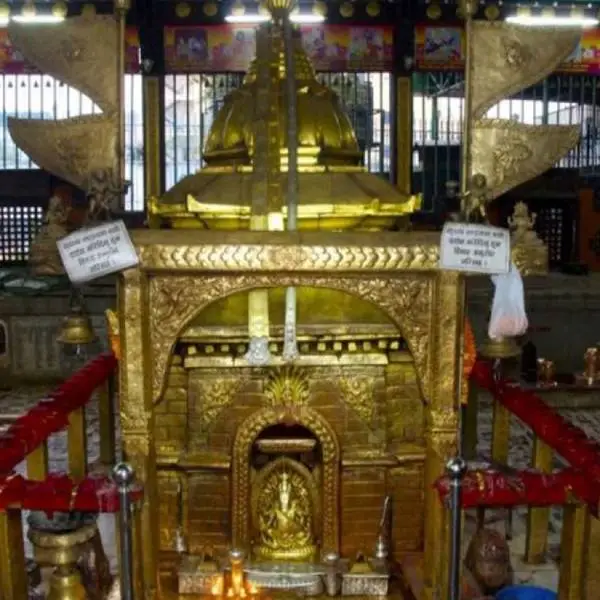
Ganesh shrines throughout the Kathmandu Valley also receive devotees around the festival. The valley contains numerous neighbourhood Ganesh shrines as well as well-known temples where people traditionally pray before important occasions. Ganesh has long functioned as a guardian presence within settlements, crossroads, temple complexes, and community spaces. Historical Newar traditions identify many local shrines sometimes referred to as Chwasa Ganesh, reinforcing the deity's close connection with everyday urban life.
Places such as Suryavinayak in Bhaktapur can become especially active around Ganesh Chaturthi as worshippers arrive with flowers, sweets, fruits, and other offerings. The sight of devotees gathering before a relatively small sacred image is quite different from the monumental festival installations familiar in some parts of India. Nepal's version places greater emphasis on existing temples, local shrines, inherited family practice, and established community worship.
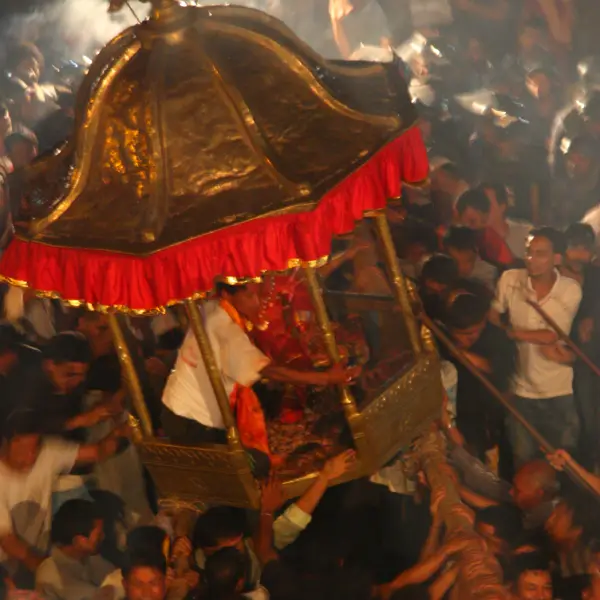
This difference is important for travelers wishing to understand the festival. Chatha should not be approached as a large public spectacle with one central venue. Its character is more dispersed. A visitor may notice increased activity at a Ganesh temple, families purchasing ritual foods in local markets, offerings being arranged inside homes, and worshippers moving through traditional neighbourhoods. Much of what makes the festival meaningful happens within community and family settings rather than on a public stage.
The occasion also provides an interesting introduction to Newar religious culture. Kathmandu Valley festivals frequently combine temple worship, household rites, food traditions, local mythology, and community responsibilities. Chatha follows this pattern on a relatively intimate scale. The festival shows how a religious observance shared across South Asia can take on a distinctly local form when interpreted through Newar history and customs.
Visitors attending temple worship should dress respectfully and avoid interrupting people performing puja. Shoes may need to be removed around sacred areas, and photography should be handled carefully. Taking a quick photograph of a temple exterior is very different from placing a camera close to someone during a private act of prayer, so asking permission is always the better approach.
At its heart, Chatha Puja in Nepal is about creating an auspicious beginning through devotion to Ganesh while maintaining traditions particular to the Newar community. Carefully arranged foods, family worship, visits to local Ganesh shrines, and the curious avoidance of the moon give the occasion an identity of its own. For travelers interested in the living traditions of the Kathmandu Valley, Chatha offers a quieter but highly meaningful glimpse into the way faith continues to shape family life, food, neighbourhoods, and cultural memory.