Biska Jatra
Biska Jatra, often called Bisket Jatra, is one of the most dramatic cultural celebrations held in the Kathmandu Valley. The festival belongs especially to Bhaktapur, where enormous wooden chariots, sacred images, traditional music, community rituals, and thousands of participants take over the historic streets for several days. Closely associated with the arrival of the Nepali New Year, the celebration follows the solar calendar rather than the lunar cycle used for many other Nepali festivals. In 2026, Biska Jatra began on 10 April and continued for eight nights and nine days, carrying the celebrations across the transition from 2082 to Nepali New Year 2083.
Bhaktapur provides an extraordinary setting for the festival. The old city is known for its brick-paved lanes, traditional Newar houses, carved windows, courtyards and pagoda temples. Nepal Tourism Board describes Bhaktapur as a historic Newar city that has preserved much of its traditional urban atmosphere. During Biska Jatra, these familiar heritage spaces stop functioning simply as sightseeing locations and become active ceremonial routes filled with worshippers, musicians and procession groups.
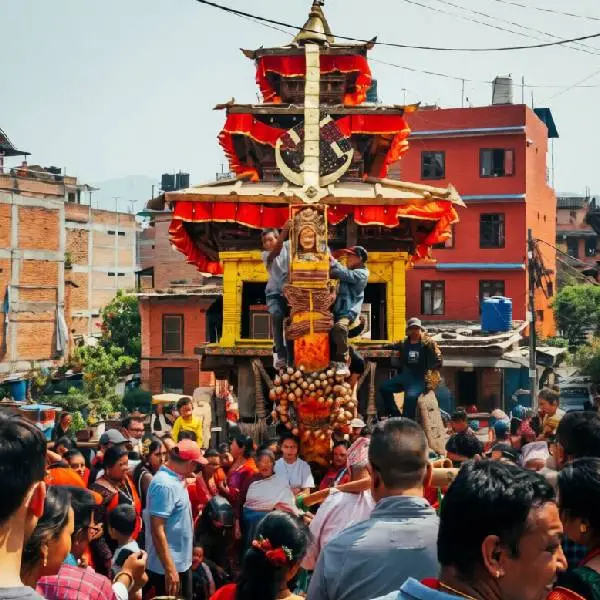
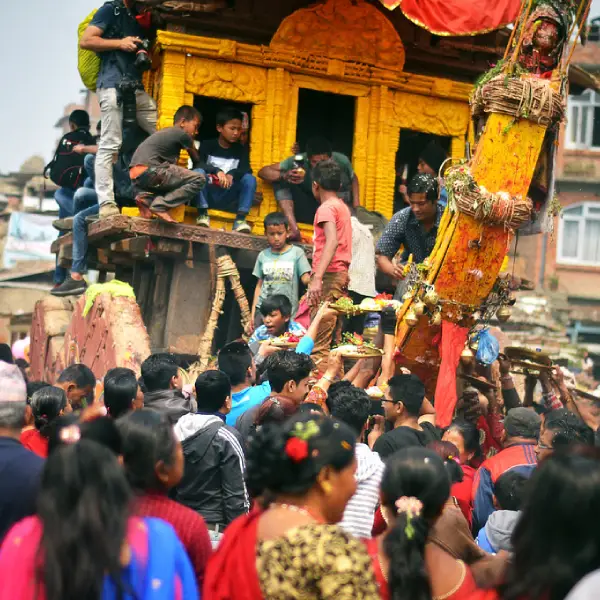
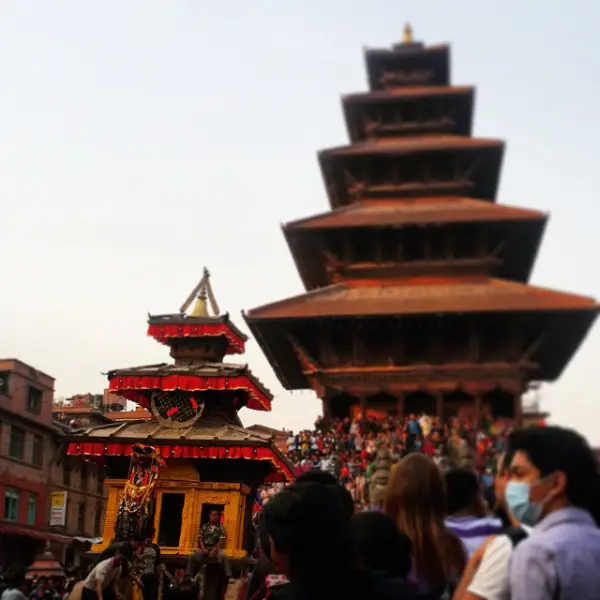
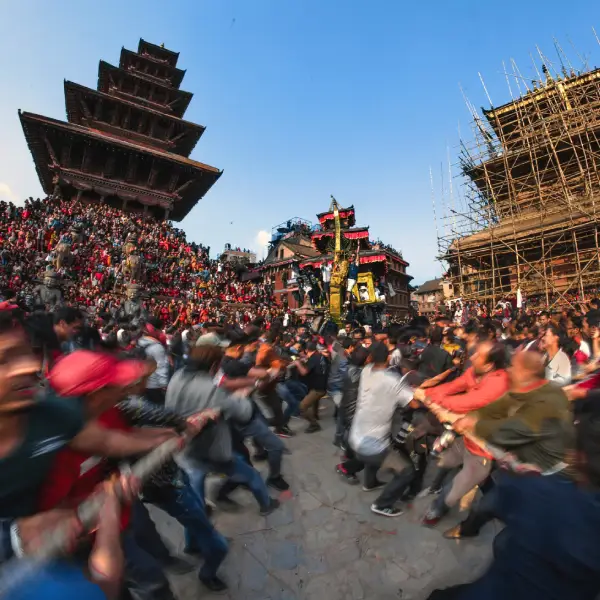
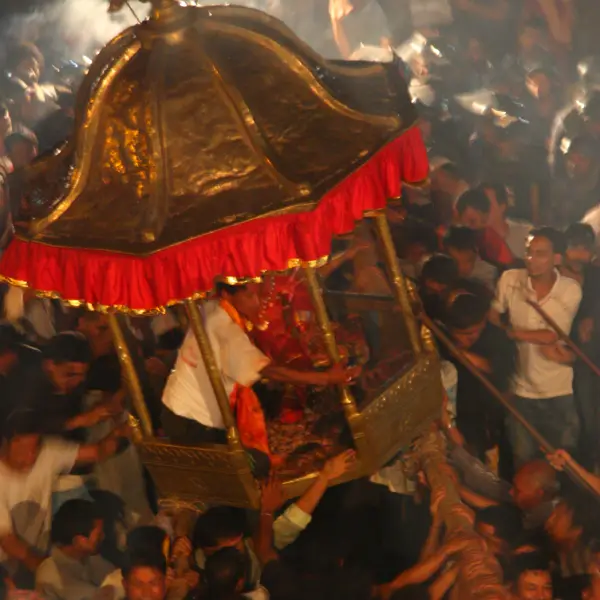
One of the festival's most anticipated moments takes place around Taumadhi Square, beside the towering Nyatapola Temple. A large wooden chariot carrying Bhairavnath is prepared for the procession, while another chariot represents Bhadrakali. Thick ropes are attached to the structures, and groups of participants pull them through the city. The huge wooden wheels, narrow streets, and dense crowd create an atmosphere that feels both festive and intense. In 2026, thousands gathered in the Taumadhi area for the Bhairavnath and Bhadrakali chariot celebrations.
The chariot pulling is not a quiet procession. Different groups traditionally pull from opposing directions, creating an energetic contest as communities try to move the chariot toward their side of the city. The result can appear chaotic to a first-time visitor, yet the activity is embedded in established local custom. Drums beat continuously, spectators watch from temple steps and windows, and residents crowd balconies and rooftops as the chariot slowly works its way through Bhaktapur.
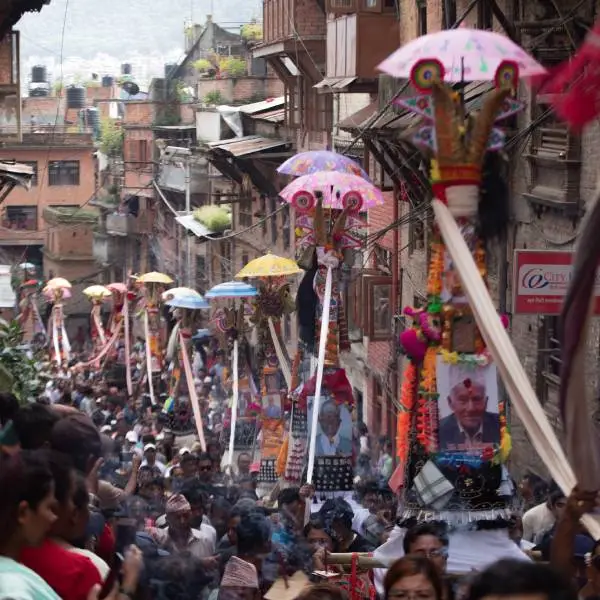
Another defining ritual involves a towering ceremonial wooden pole traditionally known as the Yosin or Lingo. Around the arrival of the New Year, the pole is raised at Lyasinkhel with long banners attached to it. Its erection and later lowering form important stages in the wider Biska Jatra cycle. In the 2026 celebrations, the pole and its flags were worshipped as Yoshin Dyo, linking the New Year transition with one of the festival's most recognisable rituals.
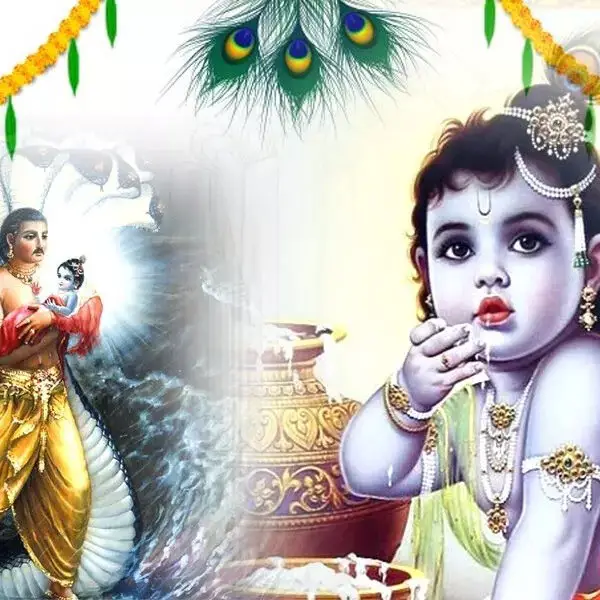
Local stories give the pole additional symbolic meaning. One well-known tradition connects Biska Jatra with a legend about dangerous serpents and their defeat. Versions of the story differ, as often happens with oral traditions that have travelled through generations. For local communities, however, such stories form part of the cultural memory surrounding the festival and help explain why imagery connected with serpents, victory and renewal continues to appear in accounts of Biska Jatra.
The arrival of Nepali New Year adds another layer to the celebration. While New Year elsewhere may centre on family meals or public countdowns, Bhaktapur welcomes the new calendar year through collective ritual. The sound of traditional drums, the movement of chariots and the gathering around temples make the transition highly public. Nepal Tourism Board specifically highlights Biska Jatra's chariot processions as one of the cultural experiences associated with the beginning of 2083.
The festival is not limited to central Bhaktapur. Nearby Newar settlements including Thimi and Bode hold their own connected celebrations. In Thimi, processions involving local deities are accompanied by music and large quantities of vermilion powder, giving streets and participants vivid shades of red and orange. Bode is particularly known for its traditional tongue-piercing observance, performed as part of the wider New Year festival cycle. These local events demonstrate how a shared seasonal celebration can take different forms across neighboring communities.
Traditional music remains present throughout much of the jatra. Drums, cymbals and other Newar instruments accompany processions while groups connected with local neighborhoods, temples and community organisations fulfil ceremonial responsibilities. Such participation is an important reason the festival continues to feel rooted in Bhaktapur rather than staged primarily for tourists.
For travelers, Biska Jatra offers a completely different way to experience Bhaktapur. On an ordinary day, visitors may focus on the Nyatapola Temple, Bhairavnath Temple, Durbar Square, pottery workshops, and historic architecture. During the festival, attention shifts toward the communities that still use these spaces for worship and inherited customs. Nepal Tourism Board notes that Bhairavnath Temple stands immediately beside Nyatapola, placing some of Bhaktapur's best-known architecture directly within the festival landscape.
Visitors should nevertheless approach the event carefully. Large chariots, extremely heavy wooden wheels, tight streets and ropes under considerable tension can create genuine safety risks. It is wise to observe chariot pulling from a secure position rather than standing directly beside the wheels or ropes. Crowds become particularly dense around Taumadhi Square and during major rituals.
Respect is equally important. Processions should never be blocked for photographs, and people carrying deities or performing ceremonies need enough space to move. Close portraits are better taken after asking permission, while temple rules regarding footwear and photography should always be followed.
At its heart, Biska Jatra in Bhaktapur is a celebration of continuity. Ancient streets become procession routes, neighborhoods work together to move sacred chariots, a monumental pole announces the changing year, and old stories are retold through rituals rather than simply remembered in books. For travelers interested in Nepal's living Newar heritage, few experiences reveal the energy of Bhaktapur as vividly as Biska Jatra.