Bhoto Jatra
Bhoto Jatra is one of Lalitpur’s most anticipated cultural gatherings and the ceremonial finale of the Rato Machhindranath chariot festival. Each year, a large crowd gathers at Jawalakhel to witness the public showing of a dark, jewel-decorated vest known as the bhoto. The actual display lasts only a short time, but it comes after weeks of ritual activity and the movement of an enormous traditional chariot through the old neighborhoods of Patan. In 2026, the ceremony took place on 20 June at Jawalakhel and formally concluded that year’s Rato Machhindranath procession.
Bhoto Jatra makes more sense when viewed as the final scene of a much larger tradition. Rato Machhindranath, known locally by names including Karunamaya and Bung Dya, is deeply connected with rain and agricultural well-being in the Kathmandu Valley. Nepal Tourism Board describes the wider Rato Machhindranath celebration as a long chariot festival beginning in Baisakh and continuing toward Asar. During this period, the deity is carried through different parts of Lalitpur as communities gather to worship, pull the chariot, perform rituals, and continue responsibilities inherited across generations.
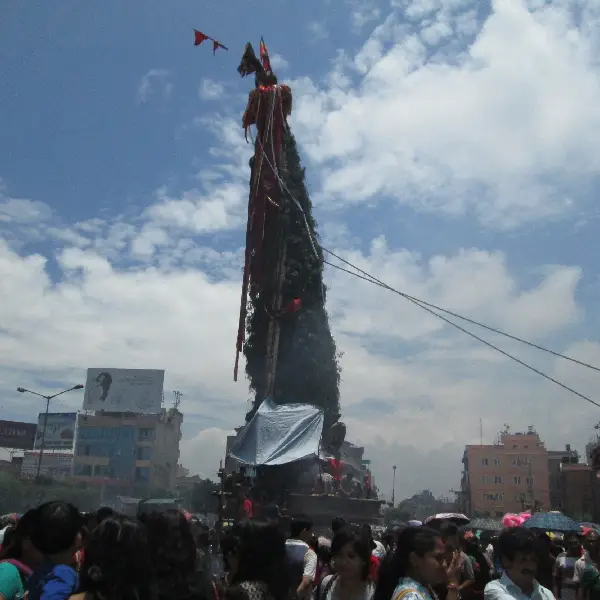
The procession eventually brings the chariot to Jawalakhel. Even then, the final ritual does not happen immediately. Local custom calls for the bhoto to be displayed on the fourth day after the chariot reaches Jawalakhel. The open grounds gradually fill with worshippers, families, cultural groups, visitors, officials, and curious spectators waiting for the concluding ceremony. This four-day interval remains part of the established festival sequence.
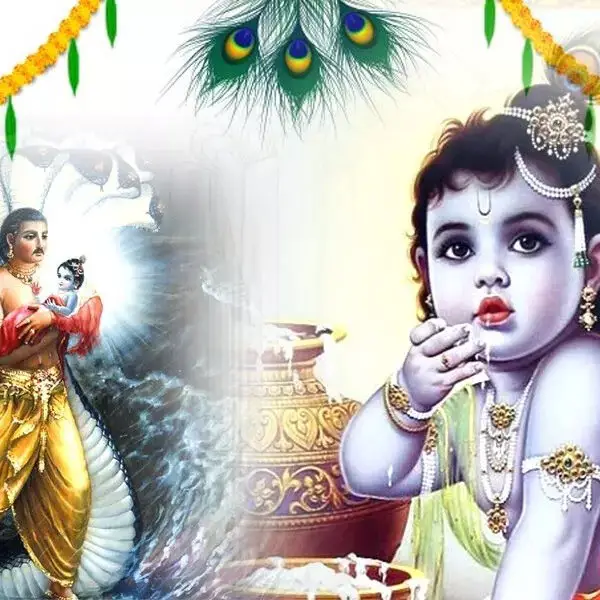
The mysterious vest gives Bhoto Jatra much of its storytelling power. According to a widely told local legend, a Jyapu farmer was rewarded with an expensive jeweled vest after helping cure the wife of Karkotaka, the serpent king. The garment later disappeared. At a festival gathering, the farmer reportedly spotted another being wearing what he believed was his lost vest, and an argument over ownership followed. Neither claimant could provide convincing evidence, so the bhoto was entrusted to Rato Machhindranath until someone could establish a rightful claim.
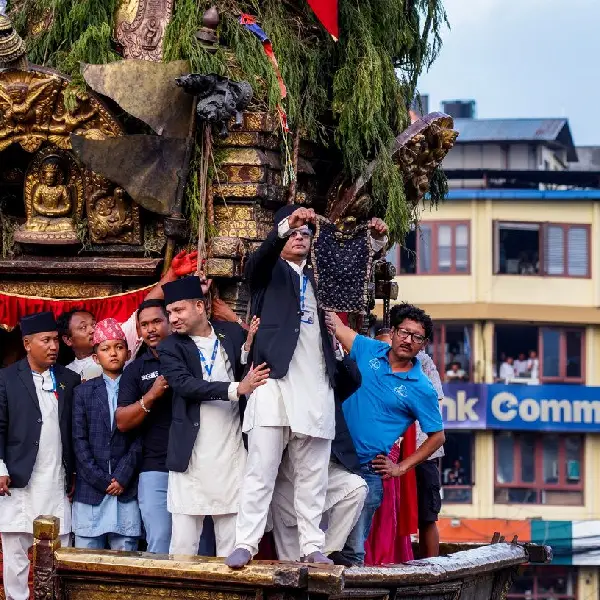
That unresolved story is symbolically repeated every year. During the ceremony, the sacred vest is lifted above the crowd from the Rato Machhindranath chariot and shown publicly. In modern Nepal, the event is attended by the head of state along with other dignitaries, while Guthi Sansthan representatives perform the traditional display. The President has taken the ceremonial role once associated with Nepal’s monarchs.
The spectacle is striking because the object everyone has waited to see appears for only a few moments. People crowd the field below, while others watch from nearby streets, rooftops, balconies, and elevated positions. The bhoto is raised where the gathered public can view it, turning a centuries-old legend into a living public ritual rather than a story preserved only in books. The jeweled vest therefore acts as both a sacred object and a link between present-day Lalitpur and its inherited cultural memory.
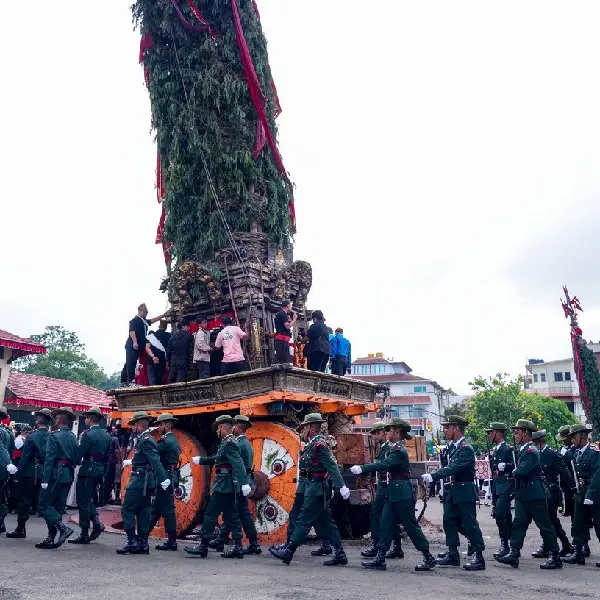
The towering Rato Machhindranath chariot is just as important to the atmosphere. During the wider festival, it moves through several parts of Lalitpur, including areas around Pulchowk, Mangal Bazaar, Sundhara, Lagankhel, Kumaripati, and finally Jawalakhel. Pulling such a large ceremonial structure through busy urban streets demands coordination among traditional groups, local communities, authorities, and participants. The journey temporarily changes ordinary roads into ritual spaces and makes entire neighborhoods part of the celebration.
Bhoto Jatra also reflects the distinctive religious culture of Patan. Rato Machhindranath occupies an important place within traditions influenced by both Buddhism and Hinduism, something characteristic of the Kathmandu Valley’s long history of religious interaction. Nepal Tourism Board notes this wider coexistence of Buddhist and Hindu traditions as an important part of Patan’s cultural identity.
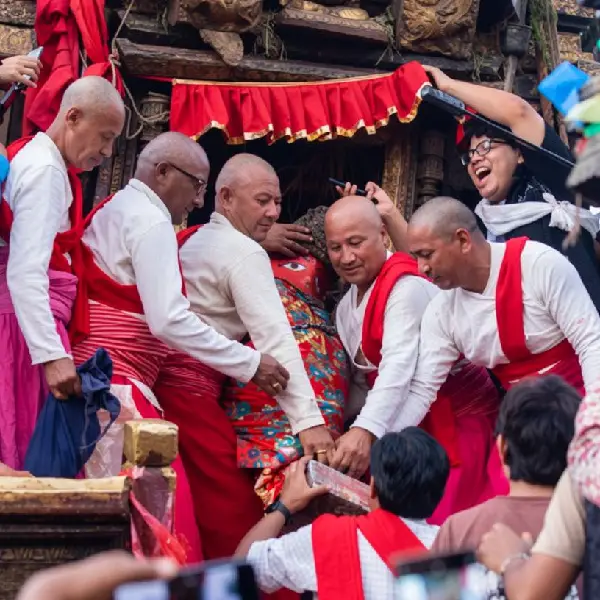
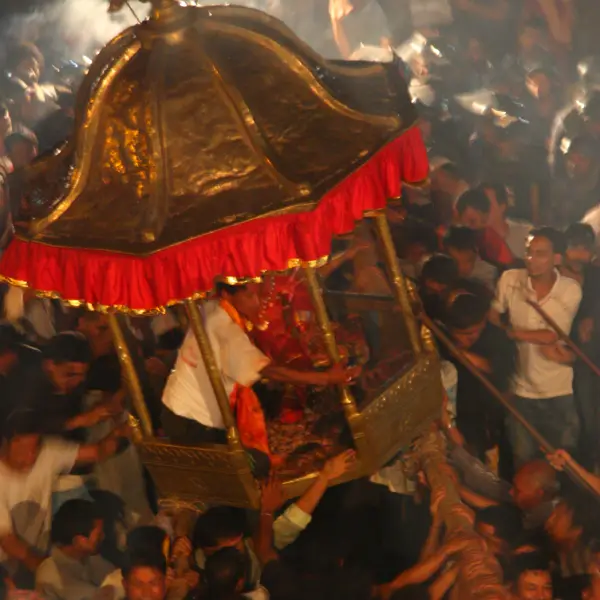
Once the vest has been shown, the annual festival begins to wind down. In the 2026 observance, the image of Rato Machhindranath was scheduled to be placed on an artistic khat, or ceremonial palanquin, and carried back from Jawalakhel to Machhindrabahal in Bungamati with traditional music. This return marks another transition in the ritual cycle, as the crowded public celebration gives way to the deity’s return to its traditional home.
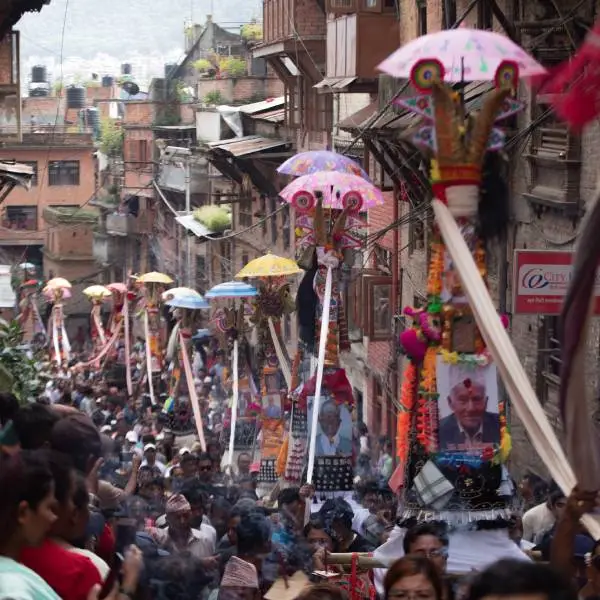
For travelers, Bhoto Jatra provides a chance to experience Lalitpur beyond its temples, museum collections, and architecture. The same streets that visitors explore during an ordinary heritage walk become crowded with devotees, musicians, procession participants, and families connected with the festival. Jawalakhel itself changes character as thousands gather around the chariot. It is one of those occasions when the heritage of Patan can be experienced not as something preserved behind glass, but as part of everyday community life.
Anyone attending should prepare for a dense crowd. Arriving well before the main ceremony can make it easier to find a comfortable viewing place, while walking is often more practical than depending on vehicles close to Jawalakhel because traffic arrangements may change. Visitors should keep clear of the chariot and ritual participants, avoid pushing into ceremonial areas, and ask permission before taking close photographs of worshippers.
At its heart, Bhoto Jatra in Nepal is far more than the display of an ornate vest. The ceremony carries the memory of an old legend, concludes one of Lalitpur’s great chariot traditions, and gathers people from different generations around a shared piece of cultural heritage. The massive chariot, the unresolved story of the bhoto, the devotion to Rato Machhindranath, and the crowd filling Jawalakhel together create an experience that belongs unmistakably to Patan. For visitors interested in Nepal’s living traditions, Bhoto Jatra offers a memorable look at how ritual, storytelling, community responsibility, and public celebration continue to shape the cultural life of the Kathmandu Valley.