Bhanu Jayanti
Bhanu Jayanti is an important literary and cultural occasion in Nepal dedicated to the memory of Adikavi Bhanubhakta Acharya, one of the most influential figures in the development of Nepali literature. Observed every year on the 29th day of the Nepali month of Asar, the day celebrates his contribution to poetry, language, literature, and Nepal’s wider cultural identity. Unlike festivals centered on religious rituals or seasonal traditions, Bhanu Jayanti is primarily a celebration of language and creative expression. In 2026, the occasion fell on 13 July, marking the 213th anniversary of Bhanubhakta Acharya’s birth.
Bhanubhakta Acharya was born in Chundi Ramgha in Tanahun in 1814. He grew up in an environment where Sanskrit learning held considerable importance, and his early education introduced him to classical religious and literary texts. At a time when much formal literature remained inaccessible to ordinary Nepali-speaking communities, Bhanubhakta helped demonstrate that the Nepali language could carry complex stories, philosophy, devotion, and poetry in a form people could understand and remember.
His most celebrated contribution was his rendering of the Ramayana into Nepali. The ancient epic had long been available primarily through Sanskrit and other literary traditions, limiting direct access for many Nepali speakers. By presenting the story in accessible Nepali verse, Bhanubhakta helped bring its characters, moral ideas, religious themes, and storytelling into homes and communities that might otherwise have depended on scholars for interpretation. His version became widely recited and gradually became an important part of Nepal’s literary heritage.
The influence of this work reached beyond the story itself. Bhanubhakta’s writing demonstrated the expressive possibilities of Nepali at a period when a standardized literary tradition was still developing. His language was understandable enough to reach ordinary readers while retaining poetic rhythm and depth. As his verses travelled through oral recitation, handwritten copies, and later printed editions, they contributed to a broader shared literary culture among Nepali-speaking communities.
Bhanubhakta also produced works beyond the Ramayana. His literary legacy includes Badhusiksha, Prashnottar, Bhaktamala, Ram Gita, and a range of shorter compositions. These writings reflected on social values, devotion, morality, daily life, and spiritual beliefs. Together, they reveal a writer whose influence was not restricted to a single epic translation but extended across several forms of Nepali literary expression.
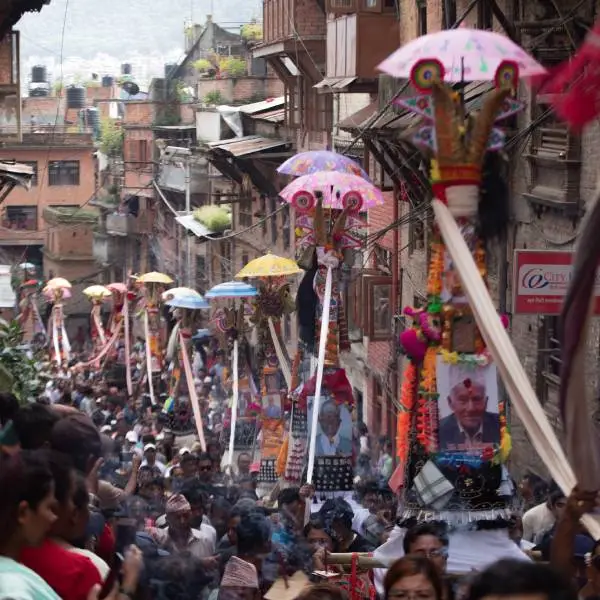
Bhanu Jayanti keeps this legacy alive through a range of cultural and educational programs. In Kathmandu, literary organizations and institutions commonly organize morning processions, commemorative gatherings, poetry recitations, discussions, and tributes at statues of Bhanubhakta. Writers, teachers, students, academics, and readers participate in events that examine both his historical importance and the continuing development of Nepali literature. Schools may hold poetry competitions, speeches, literary programs, and activities introducing younger generations to his writing.
His birthplace in Tanahun has particular importance during the anniversary. Cultural organizations and local communities organize programs around Chundi Ramgha to remember the poet in the landscape where his life began. The location gives Bhanu Jayanti a geographical connection as well as a literary one, allowing visitors to understand how a writer from a rural part of Nepal eventually became a central figure in the country’s linguistic history.
The celebration also extends beyond Nepal. Nepali-speaking communities in places such as Darjeeling, Sikkim, Bhutan, Myanmar, and other parts of the world observe Bhanu Jayanti through literary gatherings, cultural programs, poetry readings, and community events. These celebrations demonstrate how Bhanubhakta’s influence has become connected with the preservation of Nepali language and cultural identity among communities living outside Nepal.
For travelers, Bhanu Jayanti presents a quieter but highly meaningful way to experience Nepalese culture. Instead of crowded religious processions or elaborate temple rituals, visitors may encounter writers reciting poetry, students joining cultural marches, scholars discussing literature, or people placing garlands on statues of Bhanubhakta. Such activities provide insight into the importance Nepal places on language, literature, education, and cultural memory.
Kathmandu is a convenient place to observe major commemorative events, particularly around literary institutions and public spaces associated with Bhanubhakta. Travelers visiting Tanahun can gain an additional perspective by exploring the region connected with his early life. Anyone attending formal literary programs should maintain a respectful atmosphere and follow local guidance regarding photography or participation.
Bhanu Jayanti also provides an opportunity to consider how language can shape collective identity. Bhanubhakta did not create the Nepali language, but his literary work helped demonstrate its power as a medium for sophisticated storytelling and poetry. His writing reached people beyond scholarly circles and contributed to a literary tradition that later generations of Nepali writers continued to develop.
At its heart, Bhanu Jayanti in Nepal is a celebration of words and their ability to connect people across time and geography. Through poetry, public remembrance, education, and literary gatherings, the occasion honors a writer whose influence remains visible more than two centuries after his birth. For culturally curious visitors, Bhanu Jayanti offers a valuable opportunity to experience Nepal through its language and literature while understanding why Bhanubhakta Acharya continues to hold such an important place in the country’s cultural memory.