Bajrabarahi Jatra
Bajrabarahi Jatra is a deeply rooted religious and cultural celebration associated with the historic Bajrabarahi Temple at Chapagaun in Lalitpur. Dedicated to Goddess Bajrabarahi, the occasion brings together temple worship, traditional music, ritual processions, community participation, and customs preserved by local families across generations. The festival provides a fascinating glimpse into the religious life of the southern Kathmandu Valley, where sacred places, Newar traditions, and community identity remain closely connected. Unlike festivals created around large public entertainment, Bajrabarahi Jatra grows directly from local devotion and the responsibility of communities to continue inherited ritual practices.
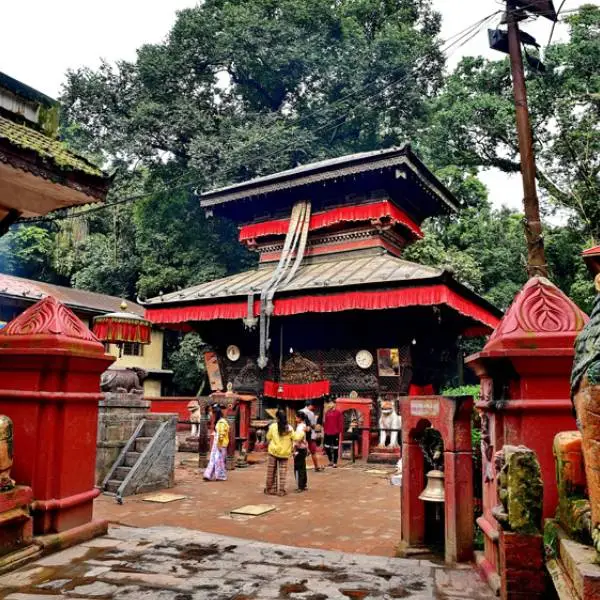
The spiritual center of the celebration is Bajrabarahi Temple, located within a wooded area near Chapagaun in Godawari Municipality. The temple is regarded as an important Shakti shrine and has long been associated with tantric forms of worship. The sanctuary is particularly distinctive because its traditional pagoda-style structure does not have the usual pinnacle, or gajur, commonly seen on many Nepali temples. The surrounding grove is itself treated with considerable respect, strengthening the sense that the temple landscape is sacred rather than simply architectural.
Local tradition connects the annual celebration with the full-moon period of Chaitra, which generally falls during March or April. On the festival occasion, special worship is performed for the goddess before her sacred representation is prepared for the ceremonial journey. The lunar calendar determines the precise timing, which means the Gregorian date can change from year to year. For visitors hoping to witness the procession, confirming the locally announced schedule is important rather than relying on a fixed annual date.
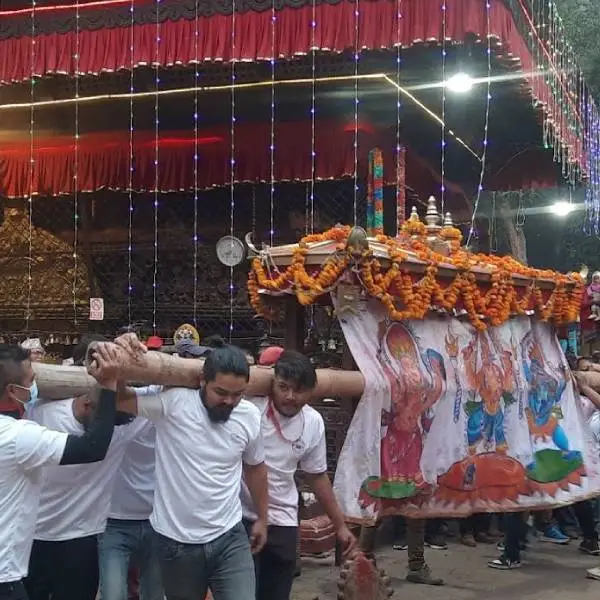
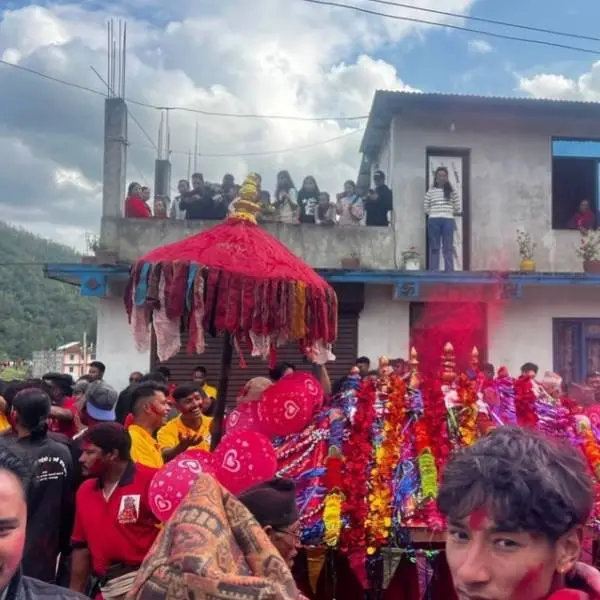
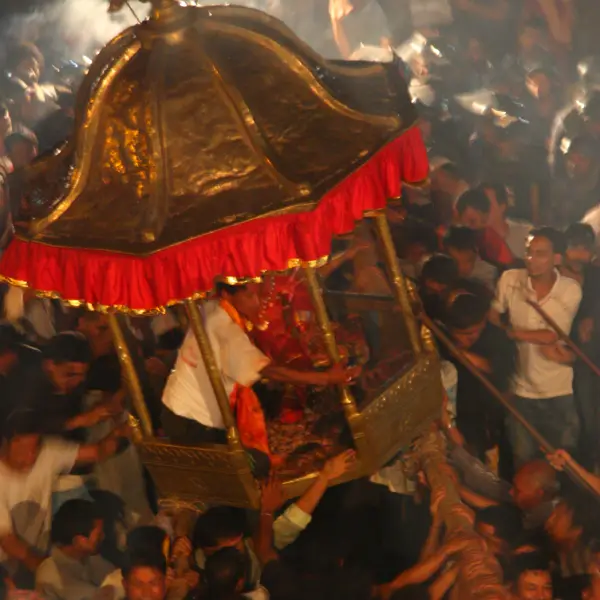
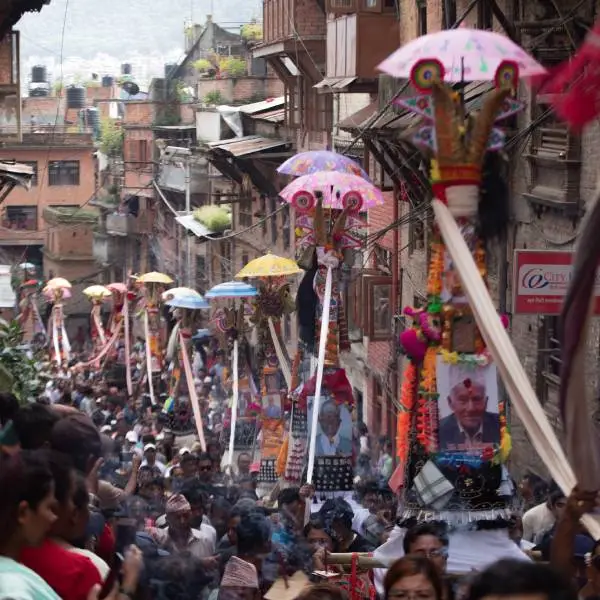
The most visually engaging part of Bajrabarahi Jatra is the khat procession. The deity is placed on a ceremonial palanquin and carried through Chapagaun and surrounding community areas. Rather than remaining inside the temple, the goddess symbolically enters the settlement and comes closer to the people who worship her. Residents gather along the route to pay respect, make offerings, and participate in the occasion. Traditional musicians accompany the procession, filling the streets with rhythms that give the jatra its unmistakable local atmosphere.
Music is not simply background entertainment during the procession. Traditional instruments form an important part of Newar ritual life and help establish the ceremonial rhythm of a jatra. Different community groups may have responsibilities connected with carrying the deity, performing music, preparing ritual materials, maintaining the procession, or organising religious activities. These inherited roles help explain why festivals such as Bajrabarahi Jatra have survived for generations: the celebration belongs not to a single organiser but to a network of families and communities that continue to carry knowledge forward.
The festival is also closely tied to stories about the goddess and the origins of her worship in Chapagaun. One local legend links the beginning of the ceremonial journey with a royal encounter with Bajrabarahi and a divine instruction to honour her through an annual procession. Such stories exist within oral tradition and may have several versions, but they remain important because they connect the physical temple with the memory and identity of the surrounding community.
For travelers, Bajrabarahi Jatra offers a very different experience from visiting the main heritage squares of Kathmandu, Patan, or Bhaktapur. Chapagaun has a quieter, more local character, allowing visitors to observe a festival within the community that maintains it. Temple bells, devotional offerings, musicians moving through old streets, decorated ritual objects, and families gathering for worship create an atmosphere that feels closely connected to everyday life rather than staged sightseeing.
The sacred forest surrounding the temple adds another dimension to the experience. Local beliefs encourage respect for the trees and natural environment around Bajrabarahi, and traditions surrounding the grove have helped give it a distinctive spiritual identity. Walking toward the temple therefore feels different from approaching a shrine located within a busy urban square. The wooded environment creates a transition from the settlement into a quieter sacred space where nature and worship exist together.
Visitors should approach the festival with sensitivity. Religious ceremonies may include traditions unfamiliar to international travelers, and some Shakti worship practices can involve ritual offerings that individuals may prefer not to observe. Temple rules should be followed carefully, footwear removed where required, and private areas respected. Photography should never interfere with worship, and permission is recommended before taking close portraits of priests, musicians, devotees, or families participating in rituals.
Arriving early can make the experience more rewarding, particularly if the goal is to observe preparations before the procession becomes crowded. Comfortable footwear is useful because following a jatra can involve standing or walking through narrow local streets. Travelers accompanied by someone familiar with Newar traditions may also gain a much deeper understanding of the rituals, symbols, music, and community roles that are difficult to interpret through observation alone.
At its heart, Bajrabarahi Jatra in Nepal is about continuity. The carrying of the goddess, sounds of traditional instruments, temple rituals, sacred landscape, and participation of local families keep an inherited tradition alive within modern Lalitpur. For culturally curious travelers, the festival offers more than a colourful procession. It provides an opportunity to witness how faith, community memory, music, local mythology, and devotion continue to shape life in the Kathmandu Valley from one generation to the next.