Bagh Bhairav Jatra
Bagh Bhairav Jatra is one of the most significant religious and cultural celebrations observed in Kirtipur, a historic Newar town located southwest of Kathmandu. The festival is dedicated to Bagh Bhairav, the protective deity of Kirtipur, and reflects the deep spiritual connection between the local community and its traditional guardian. Every year, residents, devotees, musicians, and visitors gather around the Bagh Bhairav Temple to participate in worship, cultural performances, and a ceremonial procession through the ancient streets of the town.
The festival is traditionally celebrated on the first day of Bhadra according to the Bikram Sambat calendar. This date generally falls in the middle of August in the Gregorian calendar. In 2083 B.S., Bagh Bhairav Jatra will be observed on 17 August 2026. Since the Gregorian date changes each year, travellers should verify the exact date and programme before planning their visit. The timing of the main procession and temple rituals may also differ depending on local arrangements.
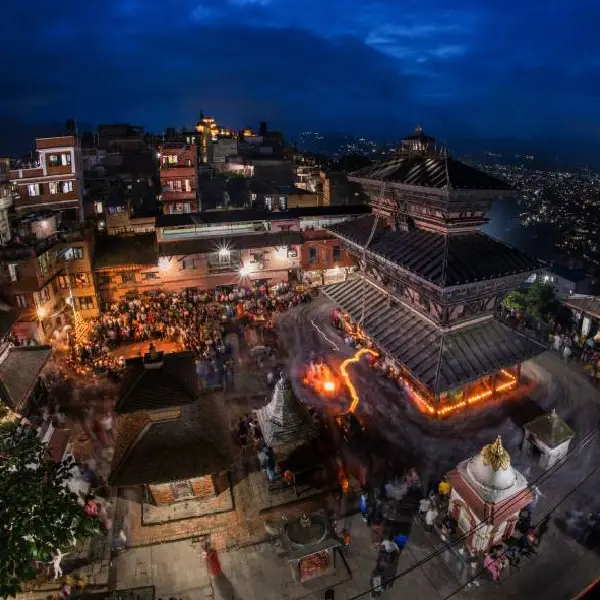
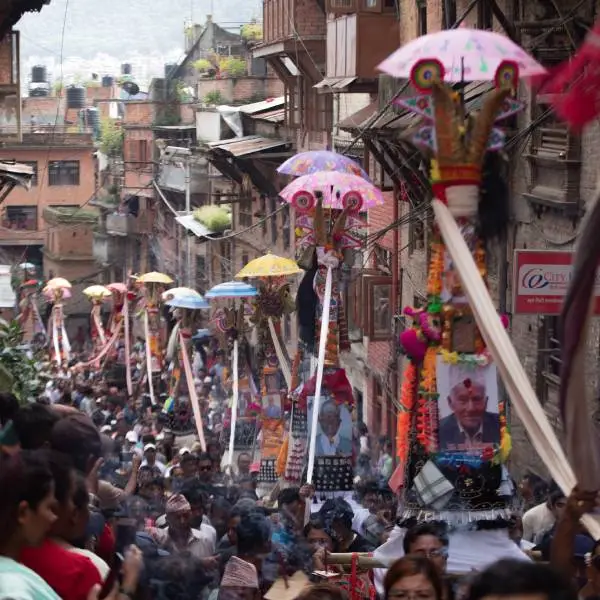
The celebration takes place at the Bagh Bhairav Temple in Kirtipur Municipality, Kathmandu District. Kirtipur is situated approximately eight kilometres southwest of central Kathmandu. The town is recognised for its traditional brick houses, narrow stone-paved streets, old courtyards, temples and panoramic views of the Kathmandu Valley. The historic surroundings provide a remarkable setting for visitors wishing to experience an authentic Newar festival.
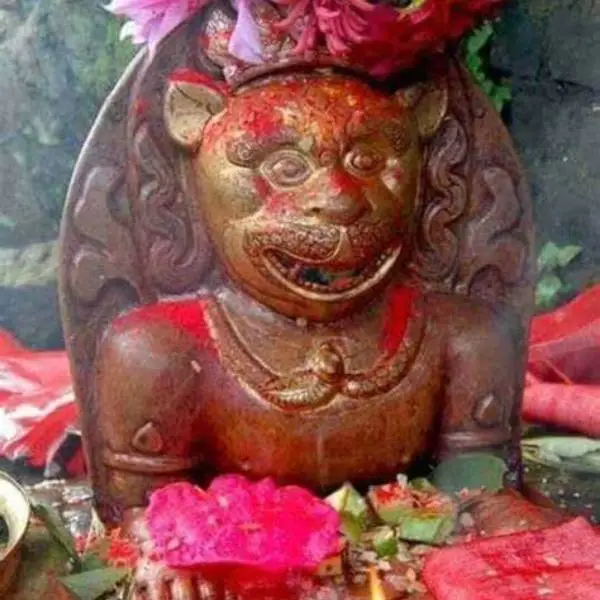
The name Bagh Bhairav has a powerful religious meaning. “Bagh” means tiger, while “Bhairav” refers to a fierce and protective form of Lord Shiva. The deity is therefore represented as Bhairav in the form of a tiger. Local residents consider Bagh Bhairav the guardian of Kirtipur and also address the deity as Ajudyo, meaning an ancestral protector. Devotees visit the temple to seek blessings for good health, prosperity, security and success in important family matters.
The religious ceremonies begin with prayers and offerings inside the temple complex. Worshippers present flowers, incense, oil lamps, fruits and other sacred items to the deity. Priests perform traditional rituals, while families wait for darshan and pray for protection and well-being. Some devotees also walk around the temple several times as part of their religious practice. Local belief suggests that completing 108 rounds around the shrine may bring good fortune, improved health and spiritual merit.
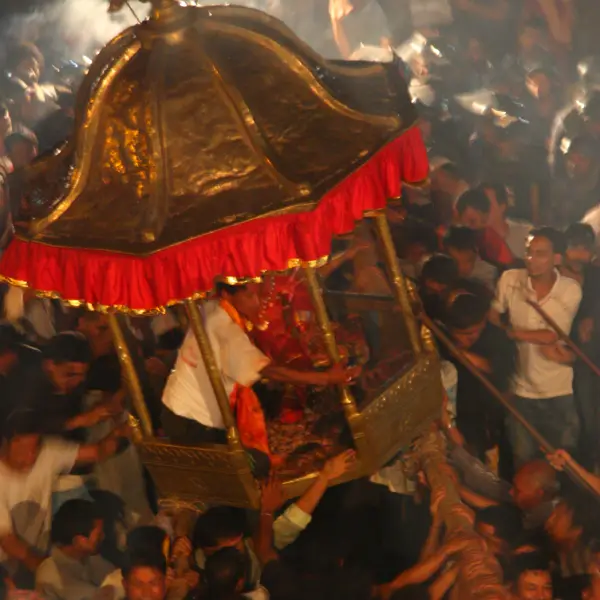
The most anticipated part of the festival is the ceremonial procession through Kirtipur. A sacred representation of Bagh Bhairav is carefully decorated with flowers, fabrics and ornaments before being placed on a khat. The khat is a traditional shoulder-borne palanquin carried by groups of local participants. Although it is sometimes called a chariot in English, it is more accurately described as a decorated ceremonial platform carried through the town.
As the procession passes through old neighbourhoods, courtyards and temple squares, residents gather along the route to offer prayers and pay respect to the deity. Participants chant devotional verses, and the movement of the khat creates an energetic atmosphere. The narrow streets can become crowded, so visitors should remain at a safe distance and avoid standing directly in front of the carriers.
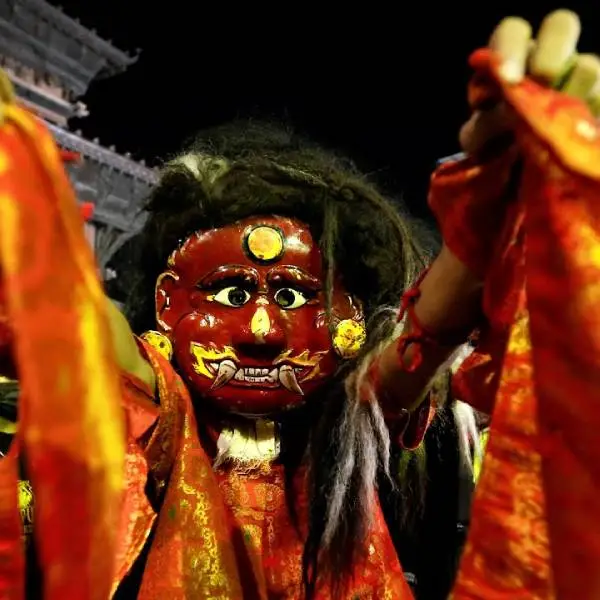
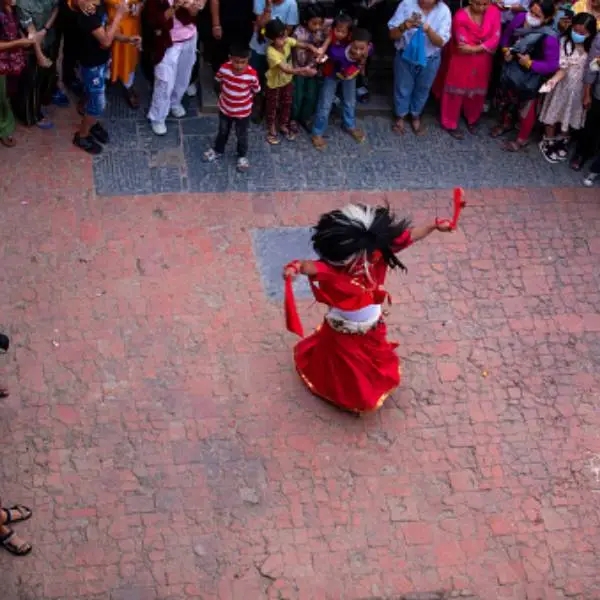
Traditional Newar music is an essential part of Bagh Bhairav Jatra. Musicians accompany the procession with drums, cymbals and wind instruments, filling the streets with powerful rhythms. Religious songs, bhajans and chanting further enhance the spiritual mood. Cultural performances, including Lakhey dance, may also be presented during the celebration. Lakhey dancers wear expressive masks and colourful costumes, representing an important part of Newar cultural heritage.
International visitors are encouraged to arrive in Kirtipur during the morning. An early arrival allows enough time to explore the temple, observe the initial rituals and find a suitable place before the procession begins. Since August is part of Nepal’s monsoon season, travellers should carry a raincoat or umbrella and wear comfortable, non-slip shoes. Cameras, mobile phones and other belongings should also be protected from rain and crowded conditions.
Kirtipur can be reached from Kathmandu by taxi, private vehicle, local bus or microbus. The journey normally takes around 30 minutes, although traffic, rainfall and festival-related road restrictions may increase the travel time. Hiring a private vehicle with a local guide is a convenient option for international travellers because some areas near the temple may only be accessible on foot during the festival.
Visitors should follow respectful photography practices throughout the celebration. Permission should be requested before photographing priests, worshippers, children, musicians or performers at close range. Flash photography should be avoided inside the temple and during sacred rituals. Travellers should not touch religious objects, block the procession or interrupt prayers for photographs. Modest clothing is recommended, and footwear should be removed wherever temple customs require it.
Journey DMC can include Bagh Bhairav Jatra in a customised cultural or spiritual tour of Nepal. The festival visit may be combined with a guided heritage walk through Kirtipur, sightseeing in Kathmandu Valley, temple visits and other seasonal celebrations. With local transportation and an experienced guide, travellers can better understand the religious meaning, community traditions and cultural importance of this unique festival.