Indrayani Jatra
Indrayani Jatra is a traditional festival celebrated by the Newar community of Nepal, especially in different parts of the Kathmandu Valley. The festival is dedicated to Goddess Indrayani, one of the powerful manifestations of Goddess Durga. It is a celebration filled with religious devotion, traditional rituals, music, dance, and community participation. The jatra reflects the deep spiritual beliefs and cultural values of the Newar people, where festivals serve as a way to preserve ancient customs and strengthen social relationships.
The festival is celebrated according to the lunar calendar, generally during the month of Kartik. During this time, devotees visit Indrayani temples to offer prayers, perform rituals, and seek blessings from the goddess. The celebration creates a vibrant atmosphere as local communities come together to honor the deity through processions, cultural performances, and traditional ceremonies. The festival is not only a religious occasion but also an important cultural event that connects people with their heritage.
Goddess Indrayani holds an important position among the various forms of divine mother goddesses worshipped in Nepal. She is considered a protective deity who provides strength, safety, and prosperity to devotees. Many people believe that worshipping Indrayani helps remove difficulties and brings peace and happiness to families and communities. The festival is therefore an expression of faith and gratitude toward the goddess.
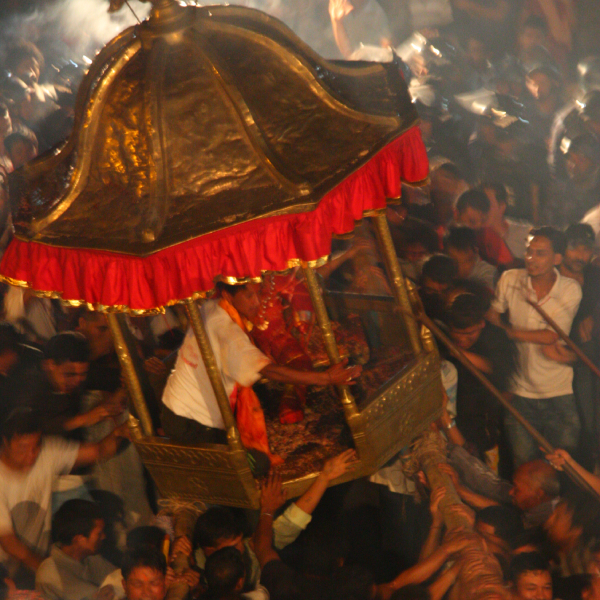
One of the major attractions of Indrayani Jatra is the procession of the deity’s idol through the streets. The sacred image of Goddess Indrayani is carried with great respect while devotees gather around to participate in prayers and rituals. In some areas, a chariot procession is also an important part of the celebration, where the idol is placed on a beautifully decorated chariot and pulled by community members. This procession symbolizes the presence of the goddess among her followers and allows devotees to receive her blessings.
Traditional music and dance are essential elements of Indrayani Jatra. Local musicians perform using traditional instruments, creating a festive and spiritual environment throughout the celebration. Masked dances, folk songs, and cultural performances add color and excitement to the event. These performances are not merely forms of entertainment; they carry religious meanings and represent stories, beliefs, and traditions passed down through generations.
The preparation for Indrayani Jatra begins well before the main festival day. Community members clean and decorate temples, prepare offerings, organize processions, and make arrangements for rituals. Priests perform important ceremonies according to traditional practices, while local groups take responsibility for managing different aspects of the festival. The collective effort of the community demonstrates the strong social cooperation that is a defining feature of Newar festivals.
Food and feasting are also important parts of the celebration. Families prepare traditional Newari dishes and gather together to share meals during the festival period. These gatherings provide opportunities for relatives, neighbors, and friends to strengthen their connections. The sharing of food represents unity, hospitality, and the importance of community relationships in Newar culture.
Indrayani Jatra also represents the close relationship between religion, art, and everyday life in the Kathmandu Valley. Many traditional festivals in Nepal combine spiritual practices with cultural expressions such as music, architecture, craftsmanship, and performance arts. Through these celebrations, communities maintain their historical identity while introducing younger generations to their cultural heritage.
For visitors, Indrayani Jatra offers an opportunity to experience an authentic Nepalese cultural celebration. Travelers can observe traditional rituals, colorful processions, local music, and the devotion of the community. Unlike modern staged events, the festival remains deeply connected to local beliefs and continues to be organized by the people who have inherited these traditions from their ancestors.
The festival also contributes to cultural tourism by showcasing the diversity of Nepal’s religious and social practices. The Kathmandu Valley is home to numerous jatras, each with unique stories, rituals, and artistic expressions. Indrayani Jatra is an example of how Nepal’s festivals preserve history and create a living connection between the past and present.
In the modern era, Indrayani Jatra continues to hold great importance among devotees and local communities. Despite changes in lifestyle and society, people continue to celebrate the festival with devotion and enthusiasm. The combination of sacred rituals, traditional performances, and community involvement keeps this ancient festival alive.
With its spiritual significance, colorful processions, and rich cultural traditions, Indrayani Jatra remains an important festival of Nepal. It represents the devotion of the Newar community, the artistic beauty of Nepalese culture, and the timeless relationship between people, religion, and tradition.
.jpg)