Wood Carving
Connect with Nepal's past and present by observing local artisans as they transform raw timber into breathtaking traditional art.
Wood carving in Nepal represents centuries of artistic skill, cultural identity, and architectural tradition, with Bhaktapur standing out as one of the most important places to experience this remarkable craft. Walking through the historic streets of Bhaktapur, visitors encounter intricately carved wooden windows, doors, pillars, roof struts, decorative panels, and religious figures incorporated into temples, palaces, courtyards, monasteries, and traditional Newar houses. These details are more than architectural decoration. They reflect the beliefs, stories, craftsmanship, and artistic knowledge that generations of Newar artisans have preserved through careful handwork.
The tradition of wood carving in the Kathmandu Valley developed over many centuries and reached a particularly high level during the Malla period, when rulers supported the construction and decoration of temples, royal buildings, courtyards, and public monuments. Skilled craftspeople transformed timber into elaborate architectural features filled with fine details and symbolic designs. Bhaktapur became especially renowned for this craftsmanship, and many examples can still be seen throughout the old city today. Historic structures provide visitors with an opportunity to appreciate how wood carving became an essential part of Nepal's architectural character rather than simply a separate decorative art.
Traditional carvings often include representations of Hindu and Buddhist deities, mythical creatures, flowers, vines, animals, geometric forms, and other symbolic patterns. Many designs carry religious or cultural meanings associated with protection, prosperity, wisdom, harmony, and spiritual belief. The combination of detailed craftsmanship and symbolism makes each carving visually distinctive while connecting it with the cultural environment in which it was created. Examining these details closely allows travelers to discover artistic elements that can easily be overlooked during a quick visit to the city's major monuments.
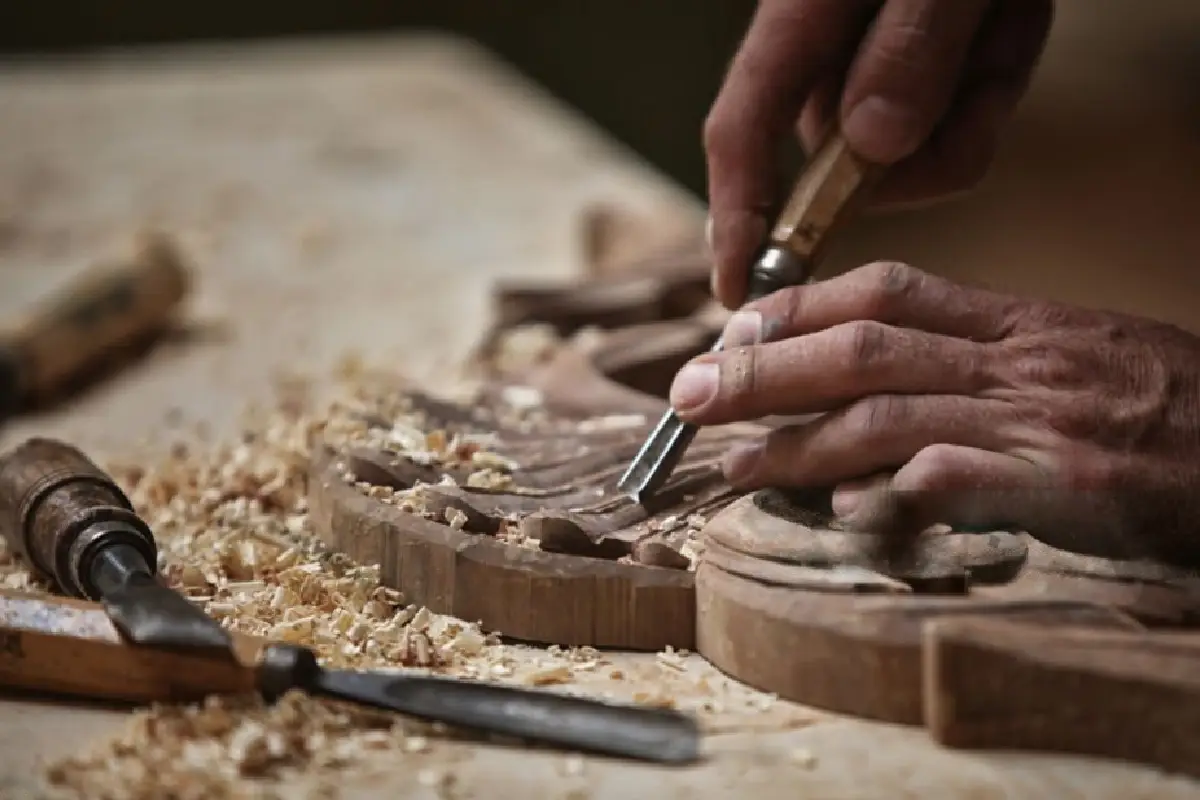
Creating a traditional wood carving requires patience, accuracy, artistic understanding, and years of practical experience. The process normally begins with selecting suitable timber and preparing the surface for the intended design. The artisan then sketches or transfers the pattern before gradually removing small sections of wood with chisels, gouges, and other hand tools. Complex designs require repeated carving at different depths to create texture, shadow, and three-dimensional detail. A single decorative panel, sculpture, or traditional window can require many hours or even weeks of careful work depending on its size and complexity.
One of the most rewarding ways to understand this process is by visiting a local wood-carving workshop in Bhaktapur. Instead of seeing only finished pieces displayed on historic buildings, visitors can observe artisans working directly with wood and watch a design slowly take shape. Workshops may contain unfinished panels, religious figures, decorative objects, traditional windows, furniture, and custom pieces at different stages of production. Seeing the tools, techniques, and concentration involved gives travelers a much stronger appreciation of the skill required to maintain this traditional craft.
Bhaktapur Durbar Square and the surrounding heritage areas provide an excellent setting for discovering traditional craftsmanship. The historic palaces, temples, courtyards, and residential streets display numerous examples of carved wooden architecture. The famous 55-Window Palace is particularly associated with elaborate wooden windows, while traditional houses throughout the city feature beautifully detailed frames, balconies, doors, and structural elements. Exploring beyond the main square can be equally rewarding, as smaller lanes and residential neighborhoods often reveal craftsmanship integrated naturally into everyday buildings.
Wood carving also provides an important connection between Nepal's past and its present. Although many historic examples are centuries old, skilled craftspeople continue to produce traditional and contemporary pieces today. Their work helps maintain knowledge of carving techniques while supporting restoration, architecture, religious art, furniture making, and decorative crafts. Younger artisans learning these skills play an important role in ensuring that the tradition continues rather than becoming something visible only in museums or historic monuments.
For culturally curious travelers, visiting a workshop creates a more personal experience than simply photographing architectural landmarks. Conversations with artisans can reveal how different patterns are created, how tools are used, and how traditional designs are adapted for modern purposes. Purchasing authentic handmade work directly from local craftspeople can also support artisan livelihoods and encourage the continuation of traditional skills. Visitors interested in buying carved pieces should consider craftsmanship, materials, size, transportation requirements, and any relevant regulations before carrying wooden objects internationally.
Photography can be an enjoyable part of the experience, particularly because workshops provide opportunities to capture detailed handwork, traditional tools, raw timber, and finished carvings. However, visitors should ask permission before photographing artisans closely or entering active workspaces. Respectful observation allows craftspeople to continue working without unnecessary interruption and creates a more positive interaction between travelers and local communities.
Exploring wood carving in Bhaktapur ultimately offers a deeper understanding of Nepal's living cultural heritage. The experience connects architecture, religion, craftsmanship, history, and community traditions within one of the Kathmandu Valley's most remarkable heritage cities. Whether admiring centuries-old carved windows, walking through temple courtyards, observing an artisan shaping wood by hand, or learning the meaning behind traditional motifs, visitors gain a greater appreciation of the patience and creativity behind Newar craftsmanship. Wood carving is not simply an art preserved from Nepal's past; it remains a living tradition that continues to shape the cultural identity and visual character of Bhaktapur today.