Pottery
Molding the Earth: How the Ancestral Artisans of the Kathmandu Valley Keep an Ancient Craft Alive in Modern Times
Pottery is one of Nepal's oldest and most cherished traditional crafts, reflecting centuries of artistic heritage, cultural identity, and skilled craftsmanship. For generations, local potters, particularly from the Newar community, have transformed simple clay into beautiful and functional objects used in everyday life, religious ceremonies, and festivals. Today, visitors can experience this living tradition by visiting Pottery Square in Bhaktapur, where artisans continue to practice age-old techniques passed down through their families. Watching skilled craftsmen shape clay by hand and on the potter's wheel offers a fascinating glimpse into Nepal's rich cultural legacy while providing an opportunity to appreciate the dedication behind every handcrafted piece.
The history of pottery in Nepal dates back more than a thousand years, making it one of the country's oldest surviving art forms. Long before modern manufacturing, clay vessels were essential for storing water, cooking food, preserving grains, and performing religious rituals. The Newar civilization, renowned for its remarkable artistic achievements, played a significant role in preserving and refining pottery techniques throughout the Kathmandu Valley. Pottery remains an integral part of many Nepalese festivals and traditions, with earthen lamps, ceremonial vessels, and ritual pots continuing to be used during religious celebrations. Although modern materials have replaced many traditional clay products, the craft remains an important symbol of Nepal's cultural heritage and continues to support local artisan communities.
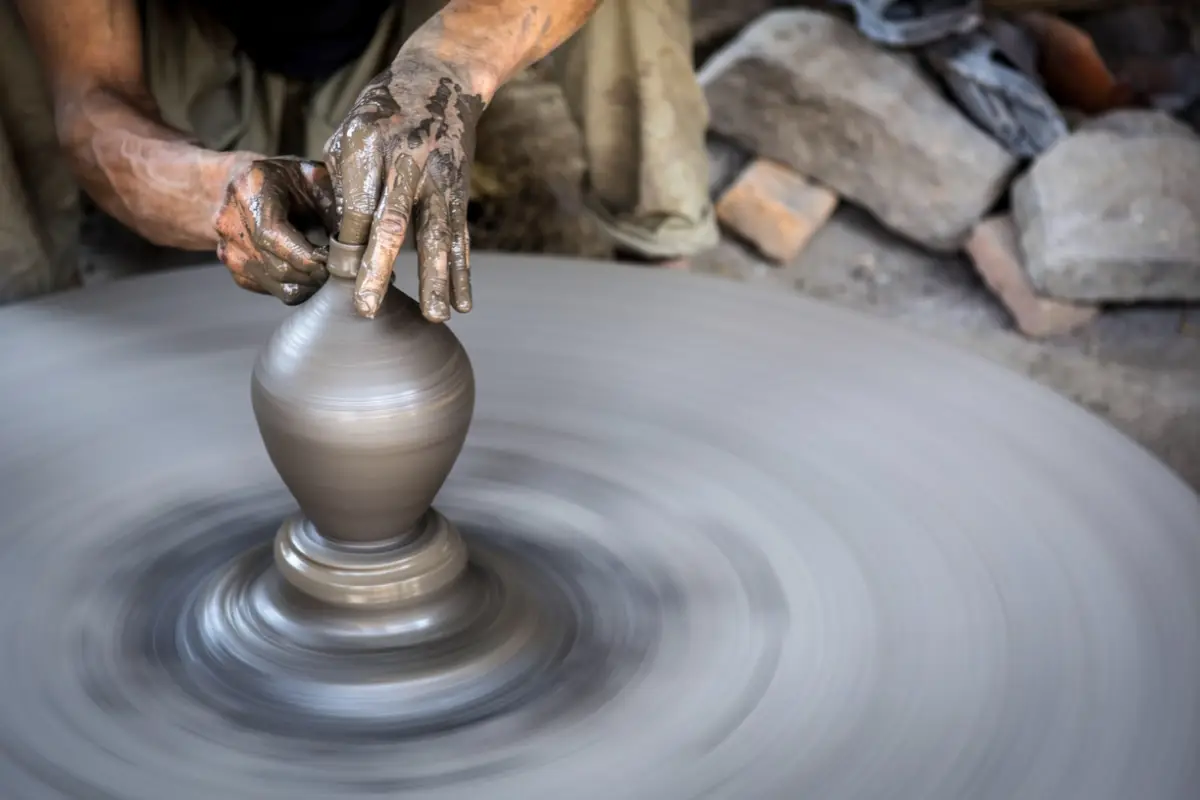
The pottery-making process is both fascinating and labor-intensive, requiring patience, precision, and years of experience. It begins with collecting high-quality clay, which is carefully cleaned and mixed with water until it reaches the perfect consistency. The prepared clay is then kneaded by hand to remove air pockets before being placed on a traditional or electric potter's wheel. With remarkable skill and steady hands, the artisan gently shapes the spinning clay into pots, bowls, vases, lamps, or decorative items using only simple hand tools and techniques that have remained largely unchanged for centuries. Once shaped, the pottery is left to dry naturally under the sun before being carefully refined, smoothed, and decorated if required. Finally, the dried pieces are fired in traditional brick kilns at high temperatures, transforming the soft clay into durable ceramic products. Some items are left in their natural terracotta color, while others are painted or glazed to enhance their appearance.
A visit to Pottery Square in Bhaktapur offers an authentic cultural experience where visitors can observe every stage of this traditional craft. The square is filled with rows of freshly made clay pots drying under the sun, creating a unique and colorful scene that reflects the rhythm of daily artisan life. Guests can watch experienced potters expertly shape clay on spinning wheels, interact with local craftsmen, and learn about the techniques and history behind the craft. Many workshops also provide hands-on pottery sessions, allowing visitors to try creating their own clay masterpiece under the guidance of skilled artisans. In addition to observing the production process, visitors can browse shops selling handcrafted pottery, decorative ceramics, flower pots, tea sets, souvenirs, and traditional household items, making it an excellent place to purchase authentic locally made products while supporting the artisan community.
Pottery Square is conveniently located in the historic city of Bhaktapur, a UNESCO World Heritage Site renowned for its beautifully preserved medieval architecture and vibrant Newar culture. The square can easily be explored alongside Bhaktapur Durbar Square, traditional courtyards, ancient temples, and local markets, making it a perfect addition to a cultural sightseeing tour. Visitors are encouraged to wear comfortable footwear, as the streets are paved with traditional brick pathways. Photography is generally welcomed, although it is courteous to ask for permission before taking close-up photographs of artisans at work. Those participating in pottery-making sessions should be prepared to get their hands dirty, as working with clay is an interactive and enjoyable experience suitable for visitors of all ages.
A pottery experience in Nepal is much more than watching artisans create clay vessels, it is an opportunity to connect with one of the country's oldest living traditions. By learning about the history of pottery, observing the remarkable craftsmanship of Newar artisans, and trying the techniques firsthand, visitors gain a deeper appreciation of Nepal's artistic heritage and cultural identity. Whether you leave with your own handmade creation or a beautifully crafted souvenir, the experience offers lasting memories of the creativity, skill, and traditions that continue to thrive in the heart of Bhaktapur.