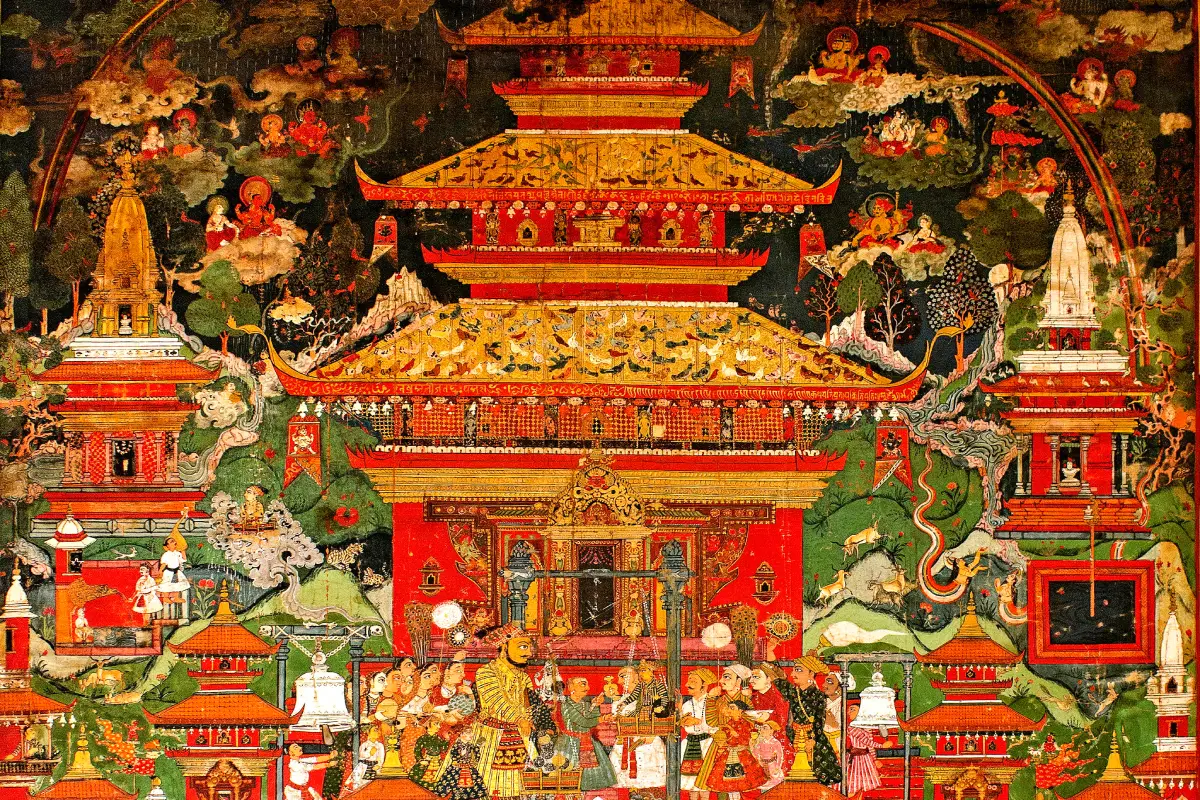
Paubha Painting
Step inside the traditional workshops of Patan to witness Nepal's most treasured spiritual art form
Paubha painting is one of Nepal's most treasured artistic traditions, representing centuries of spiritual devotion, cultural heritage, and exceptional craftsmanship. Originating in the Kathmandu Valley, Paubha paintings are intricate religious artworks created on cloth using natural pigments, gold, and fine brushes. These paintings primarily depict Buddhist deities, Bodhisattvas, mandalas, and sacred scenes, serving not only as beautiful works of art but also as important objects of meditation and worship. The tradition is especially associated with the Newar community, whose master artists have preserved this sacred art form for generations. Today, visitors to Nepal have the unique opportunity to witness the creation of authentic Paubha paintings and gain insight into one of the country's finest artistic legacies.
The history of Paubha painting dates back more than a thousand years and is deeply intertwined with the development of Buddhism in the Kathmandu Valley. The word Paubha comes from the Newar language, meaning "a painting on cloth." Long before canvas became widely available, artists prepared specially treated cotton cloth to create portable religious paintings that could be displayed during festivals, ceremonies, and private worship. Paubha art later influenced the development of Tibetan Thangka painting, and the two traditions continue to share many artistic techniques and religious themes. Throughout history, kings, monasteries, and wealthy patrons commissioned Paubha paintings to preserve sacred teachings, decorate temples, and inspire spiritual devotion. Many centuries-old masterpieces can still be admired in monasteries, museums, and private collections throughout Nepal.
Creating a Paubha painting is a meticulous process that demands patience, precision, and years of dedicated training. The journey begins with preparing a cotton canvas, which is stretched over a wooden frame and coated with a mixture of natural chalk and animal glue to create a smooth painting surface. Once dried and polished, the artist carefully sketches the composition according to strict religious proportions that have been preserved for centuries. Every deity, facial expression, hand gesture, ornament, and lotus pedestal follows sacred guidelines described in Buddhist scriptures. Natural mineral pigments and vegetable-based colors are then applied in multiple delicate layers using extremely fine brushes. Finally, details are enhanced with genuine gold accents and intricate decorative patterns before the painting is polished and blessed. Depending on its size and complexity, a single authentic Paubha painting may require several weeks or even months to complete.
Every element within a Paubha painting carries profound symbolic meaning. The central deity often represents compassion, wisdom, protection, or enlightenment, while surrounding figures, animals, lotus flowers, clouds, mountains, and celestial beings each convey specific spiritual teachings. Colors also play an essential role in Buddhist symbolism. Blue represents wisdom and the infinite sky, white symbolizes purity and peace, red signifies compassion and spiritual power, green reflects activity and protection, and yellow represents knowledge, prosperity, and the earth. Sacred geometric mandalas symbolize the universe and serve as meditation tools, while the intricate halos surrounding enlightened beings represent their divine wisdom and spiritual radiance. Rather than being decorative artwork alone, every Paubha painting functions as a visual representation of Buddhist philosophy and a guide for meditation and spiritual contemplation.
No visit to Nepal's artistic heritage is complete without exploring Patan, often referred to as the City of Fine Arts. Located in the historic Kathmandu Valley, Patan has long been the heart of traditional craftsmanship, where generations of master artisans have perfected wood carving, metal sculpture, stone carving, and Paubha painting. The city's narrow lanes are home to family-run workshops and art schools where visitors can observe artists carefully painting intricate details using centuries-old techniques. Patan Durbar Square, a UNESCO World Heritage Site, provides the perfect setting to appreciate the city's extraordinary artistic legacy, with its beautifully preserved temples, monasteries, courtyards, and museums showcasing Nepal's finest examples of sacred art.
Visitors interested in experiencing Paubha painting can join guided tours to traditional studios and workshops in Patan, where master artists demonstrate each stage of the painting process. Many workshops offer interactive sessions, allowing guests to try basic painting techniques while learning about the symbolism behind the artwork. Purchasing an authentic Paubha directly from a certified artist not only provides a meaningful souvenir but also supports local artisans who continue to preserve this ancient tradition. Photography is generally permitted within workshops, although visitors should always ask for permission before photographing artists at work. Spending time with these skilled craftsmen offers a deeper appreciation of the dedication, discipline, and spiritual devotion required to create each masterpiece.
A visit to a Paubha painting workshop is far more than an artistic experience—it is a journey into Nepal's living cultural heritage. By witnessing the extraordinary skill of Newar artisans, understanding the spiritual symbolism of each composition, and exploring the artistic treasures of Patan, visitors gain a profound appreciation for one of the Himalayan region's most refined and enduring art forms. Whether admired in a monastery, museum, or artist's studio, Paubha painting remains a timeless expression of Nepal's faith, creativity, and cultural identity.