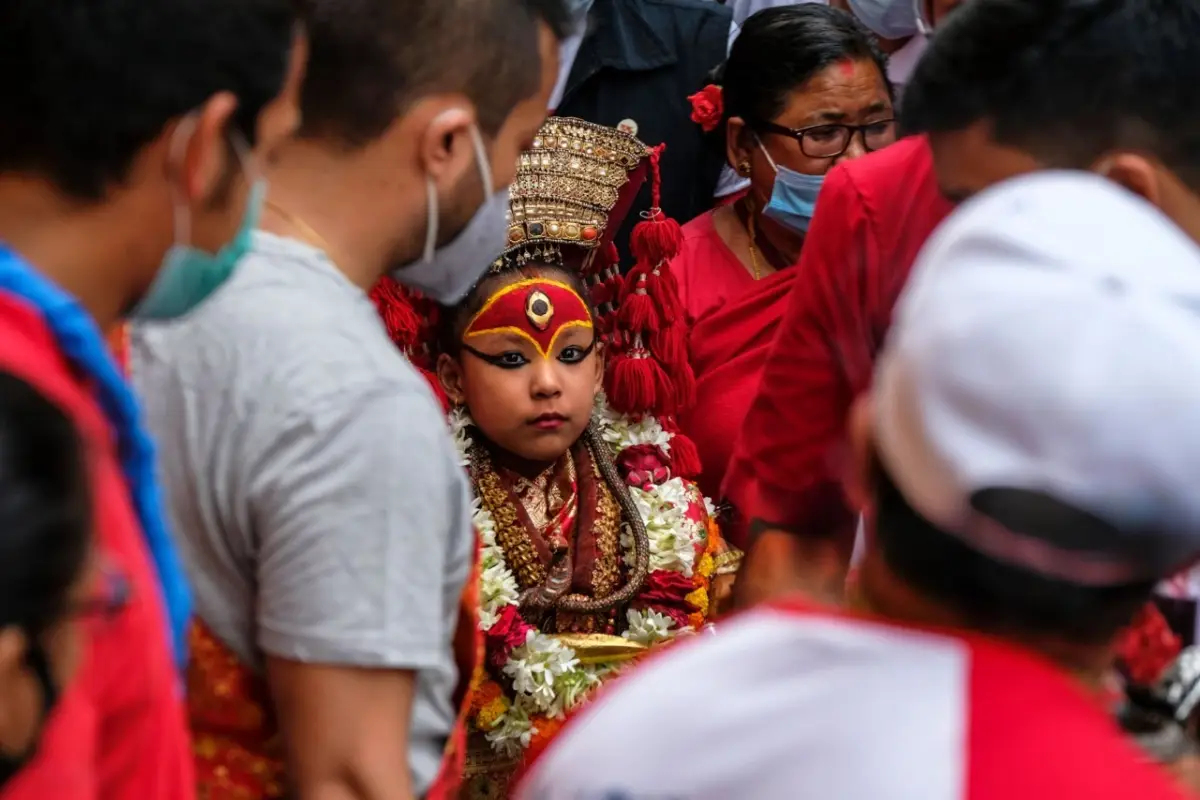
Interaction with the living goddess Kumari (if possible)
Experience a rare glimpse into Nepal's spiritual heart by exploring the beautifully preserved Kumari Ghar and its enduring cultural legacy.
The Living Goddess Kumari is one of Nepal's most extraordinary cultural and spiritual traditions, representing a unique blend of Hinduism and Buddhism that has been preserved for centuries. The Kumari is a young prepubescent girl chosen from the Newar Shakya community, who is believed to embody the divine spirit of Goddess Taleju, the royal guardian deity of the Kathmandu Valley. A visit to the Kumari Ghar (Kumari Residence) in Kathmandu Durbar Square offers visitors a rare opportunity to witness one of the world's most distinctive living traditions. While an audience with the Kumari cannot be guaranteed, as appearances are entirely dependent on her schedule and religious customs, those fortunate enough to see her experience a truly remarkable encounter with Nepal's rich spiritual heritage.
The tradition of the Living Goddess dates back to the 17th century, during the reign of King Jaya Prakash Malla, although its origins are rooted in much older legends and religious beliefs. According to one of the most popular legends, the goddess Taleju would visit the king each night to advise and protect the kingdom. When the sacred relationship was broken, the goddess declared that she would instead reside in the body of a carefully selected young girl from the Newar community. Since then, generations of Kumaris have served as living embodiments of the goddess, blessing devotees, royal families, and visitors alike. Even after Nepal became a republic, the Kumari tradition has remained an important symbol of the country's cultural identity and spiritual heritage.
The selection of a Kumari follows a highly respected religious process. Candidates must meet strict physical, spiritual, and astrological criteria and are examined by senior Buddhist priests and religious authorities. Once chosen, the Kumari resides in the beautifully carved Kumari Ghar, where she lives under the care of attendants and family members while continuing her education through private tutors. She appears publicly only during important religious ceremonies and major festivals, particularly Indra Jatra, when thousands of devotees gather to receive her blessings. Her role continues until she reaches puberty, after which a new Kumari is selected to continue the sacred tradition.
Visitors to Kumari Ghar can admire the beautifully preserved Newari architecture, featuring intricately carved wooden windows, courtyards, and traditional brickwork that reflect the artistic excellence of the Kathmandu Valley. Those hoping to see the Kumari should understand that her appearances are brief and entirely at the discretion of the temple authorities. Photography of the Kumari herself is strictly prohibited, and visitors are expected to remain quiet, respectful, and appropriately dressed while inside the residence. If the Kumari appears at one of the windows overlooking the courtyard, visitors may receive her silent blessing simply by observing respectfully. Even if an appearance is not possible, exploring the Kumari House offers valuable insight into one of Nepal's most fascinating cultural institutions.
The Living Goddess tradition holds profound cultural significance for both Hindus and Buddhists in Nepal. It symbolizes religious harmony, as Buddhist priests oversee the selection process while Hindu devotees worship the Kumari as an incarnation of the goddess Taleju. The tradition reflects Nepal's unique ability to preserve ancient customs while fostering mutual respect between different faiths. For local communities, the Kumari represents purity, protection, prosperity, and divine guidance, and her blessings are believed to bring good fortune and well-being. Throughout history, kings, political leaders, and ordinary citizens alike have sought her blessings before important events and celebrations.
An encounter with the Living Goddess Kumari offers far more than a sightseeing experience; it provides a rare opportunity to witness a centuries-old tradition that continues to shape Nepal's cultural and spiritual identity. Whether visitors are fortunate enough to see the Kumari in person or simply explore her historic residence, the experience offers a deeper understanding of Nepal's remarkable heritage, religious diversity, and enduring traditions. A visit to Kumari Ghar remains one of the most memorable highlights of Kathmandu, leaving travelers with a lasting appreciation for one of the world's most unique living cultural treasures.